13 best Framer portfolio templates
The 13 best Framer portfolio templates for designers in 2026. Compare features, prices, and find the right fit — then launch your new portfolio in days, not months.

17 min
The 13 best Framer portfolio templates for designers in 2026. Compare features, prices, and find the right fit — then launch your new portfolio in days, not months.
The honest version of portfolio advice: most portfolios are better than the sites they live on. A weak template makes good work look average. These 13 Framer templates do the opposite — bold one-pagers, CMS-powered case study archives, minimal editorial layouts, and one that’s free.
It’s worth looking at finished sites as well. I collect them on A1 — the portfolio sites are the closest match here.
Framer lets you ship a custom-feeling portfolio without writing code. The built-in CMS handles case studies and project pages natively — no third-party integrations needed. Page load performance is solid, which matters for SEO and for keeping visitors around. And because Framer is a real design tool, you can tweak the layout as your needs change without being boxed in by a rigid theme system.
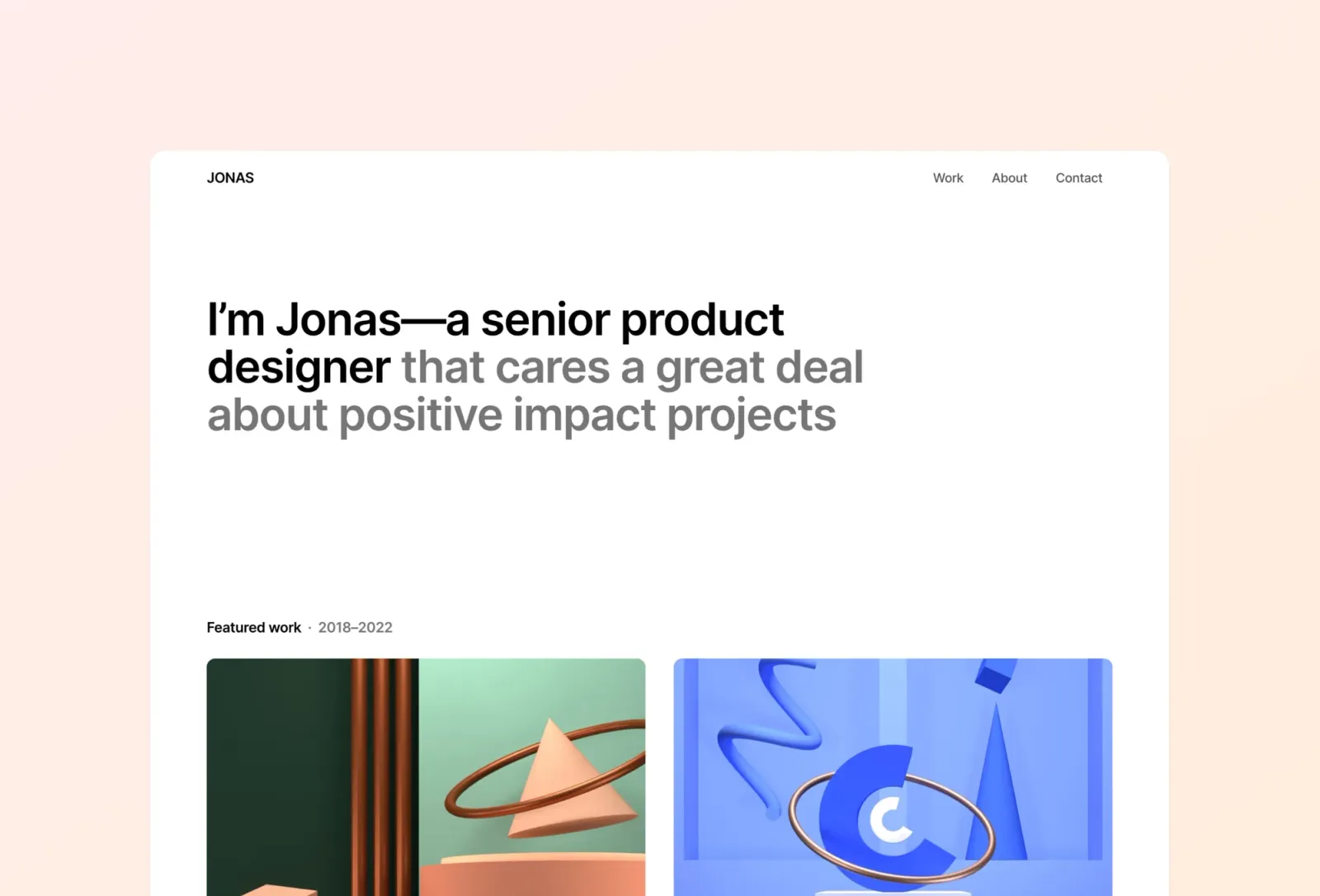
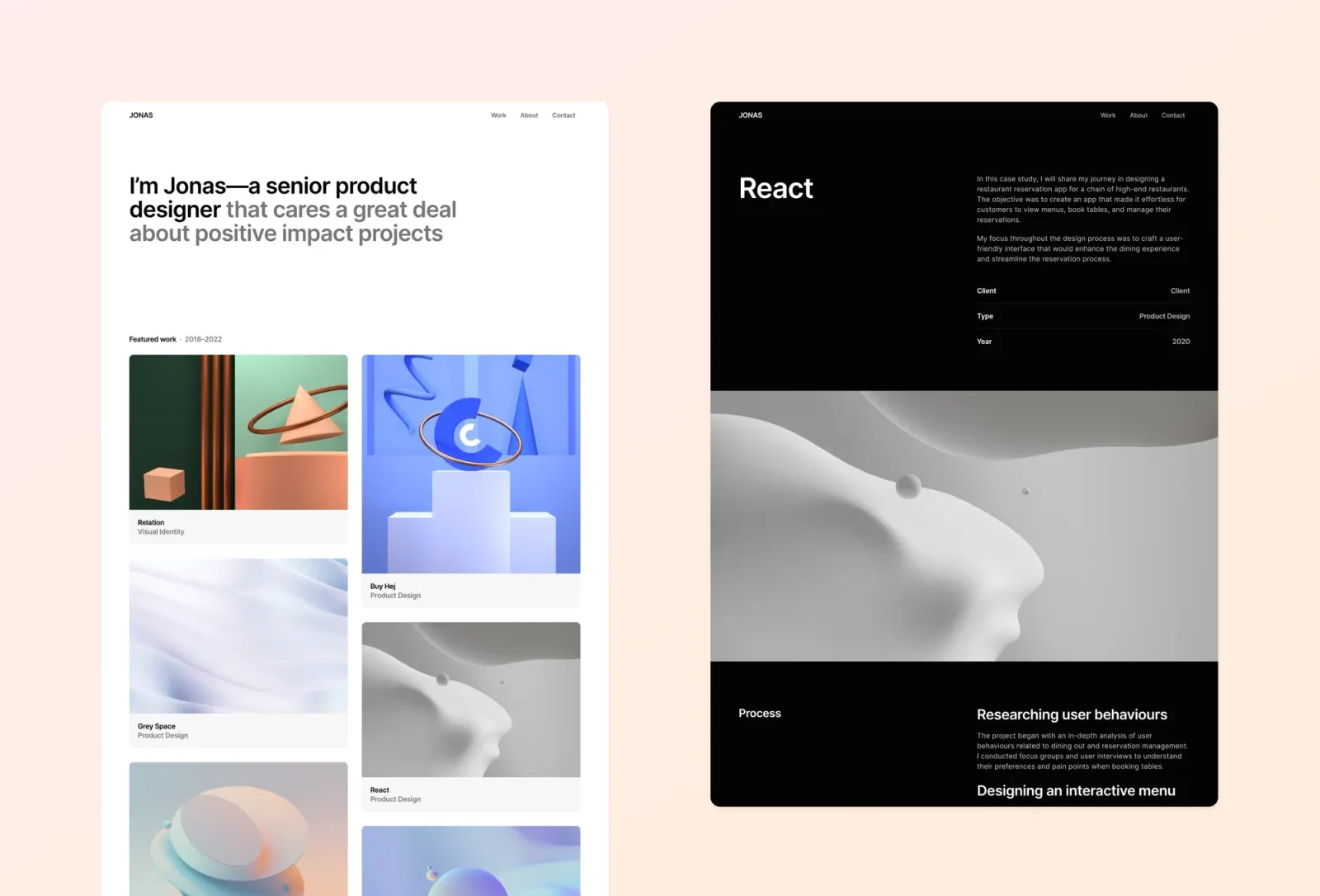
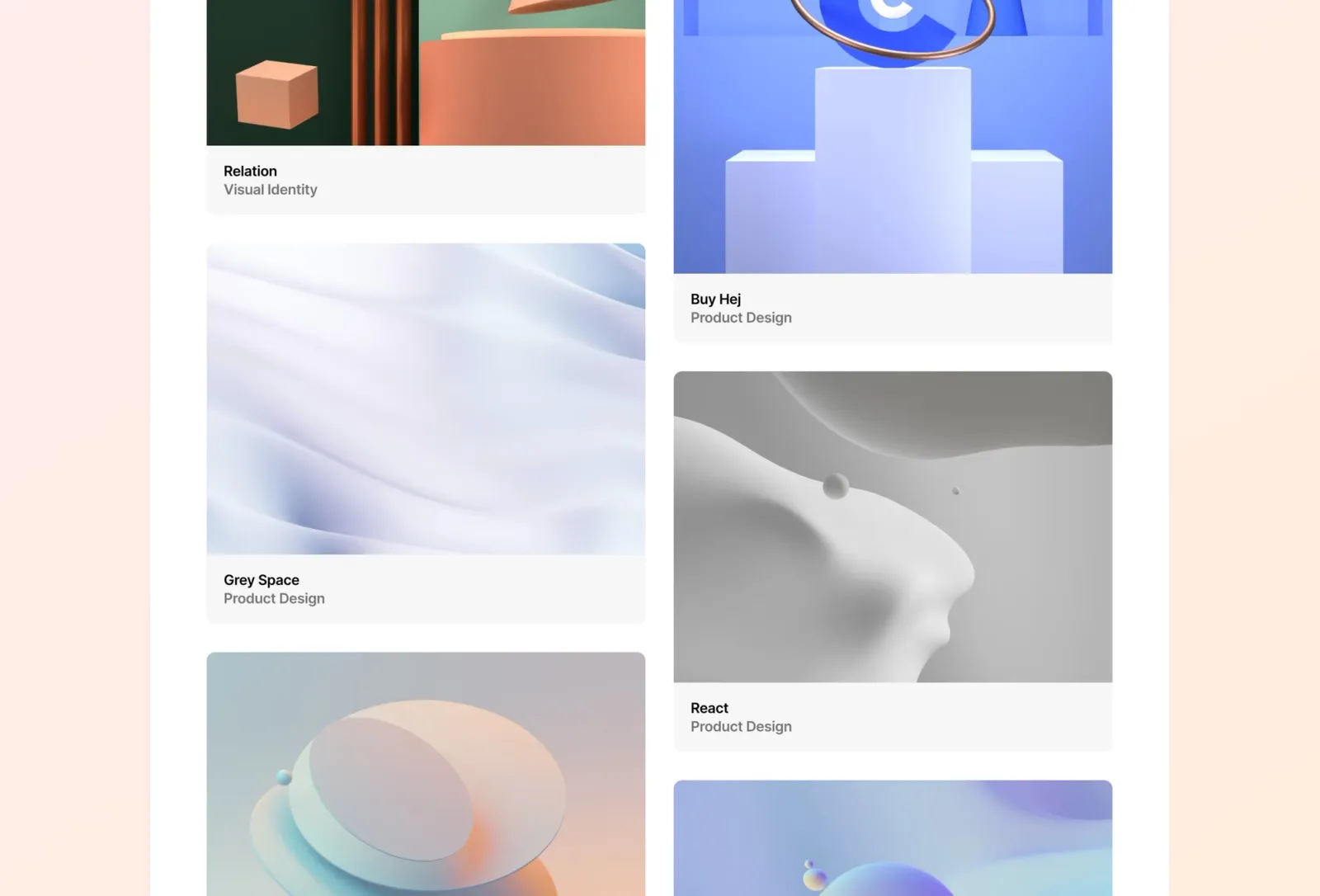
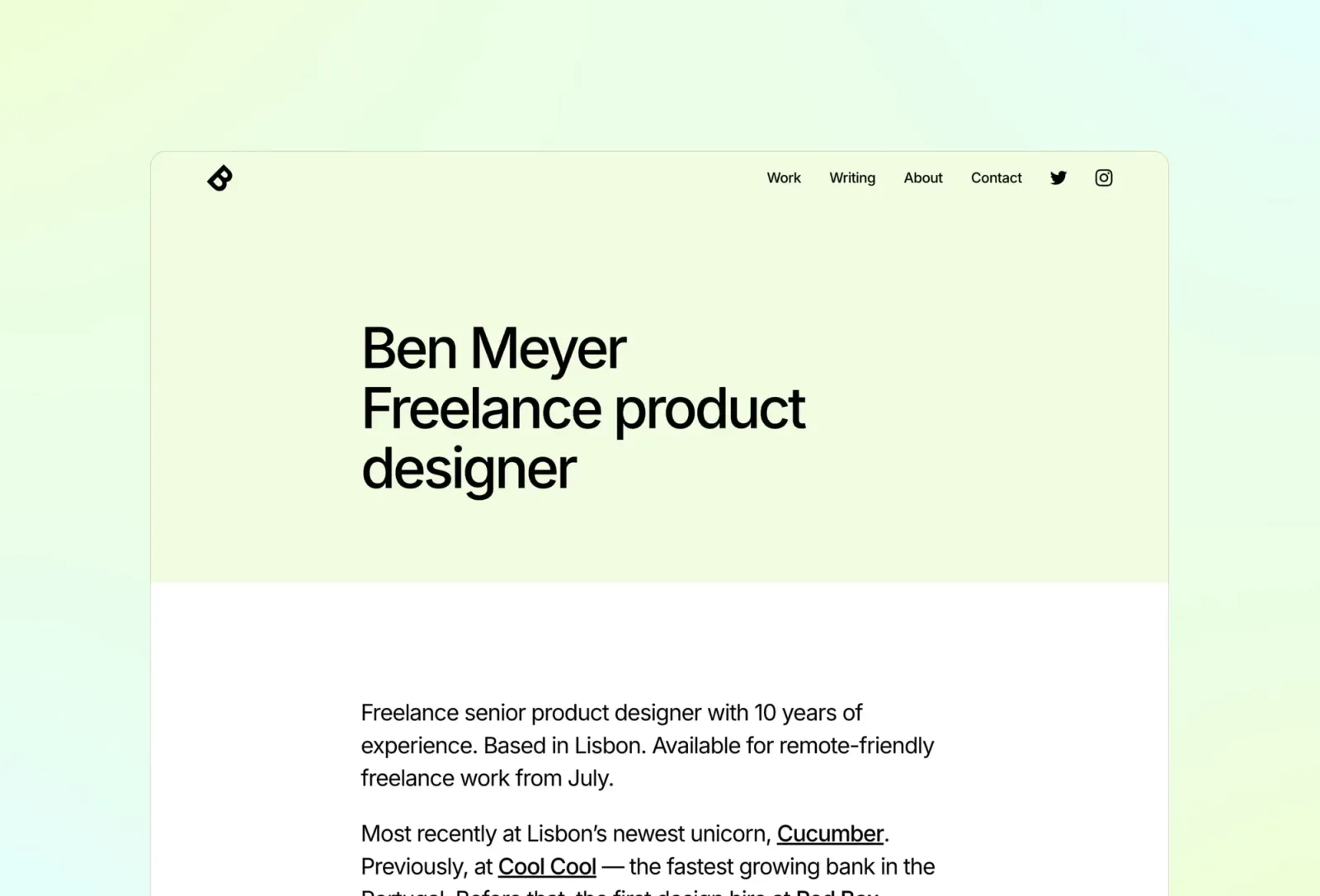
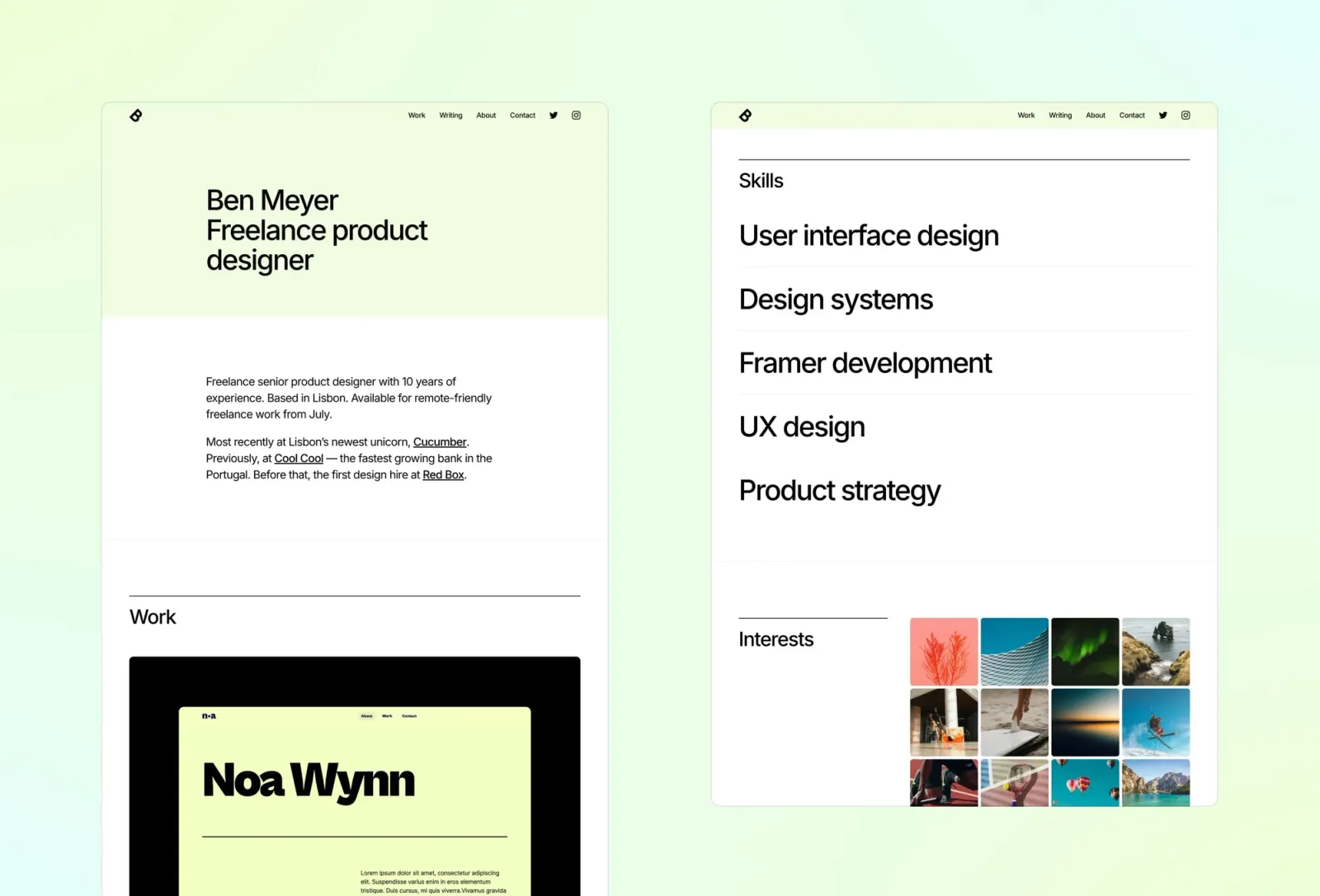
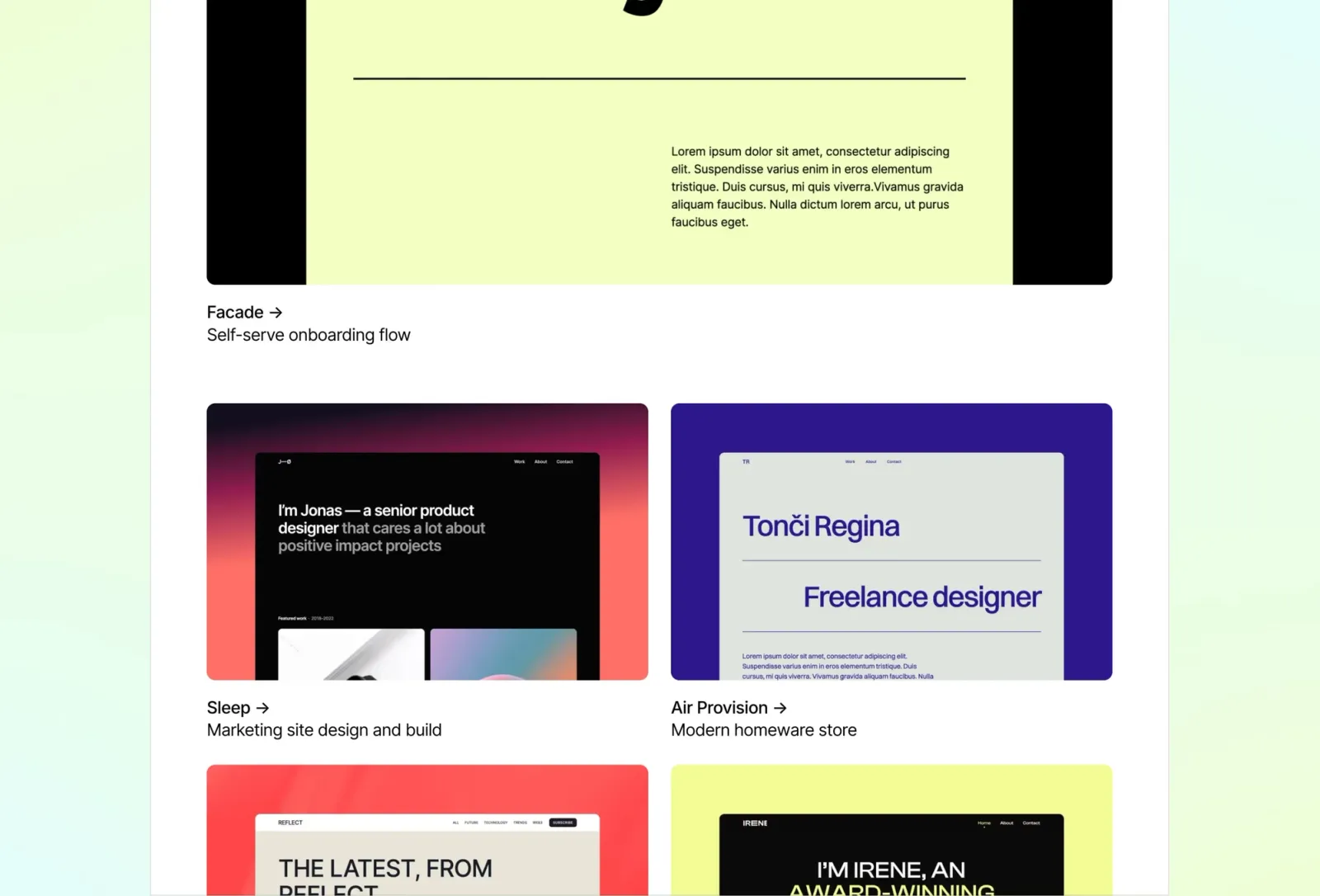
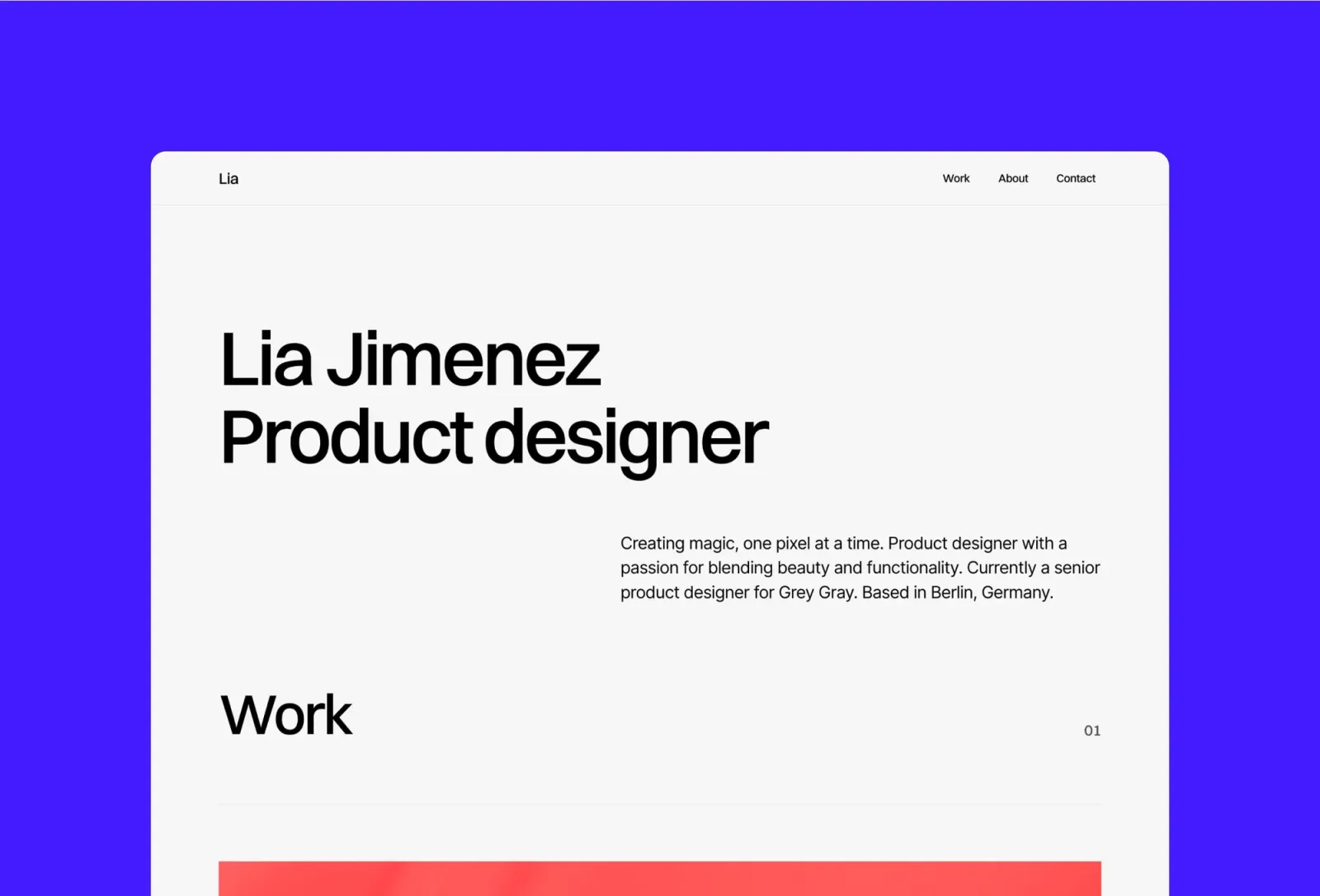
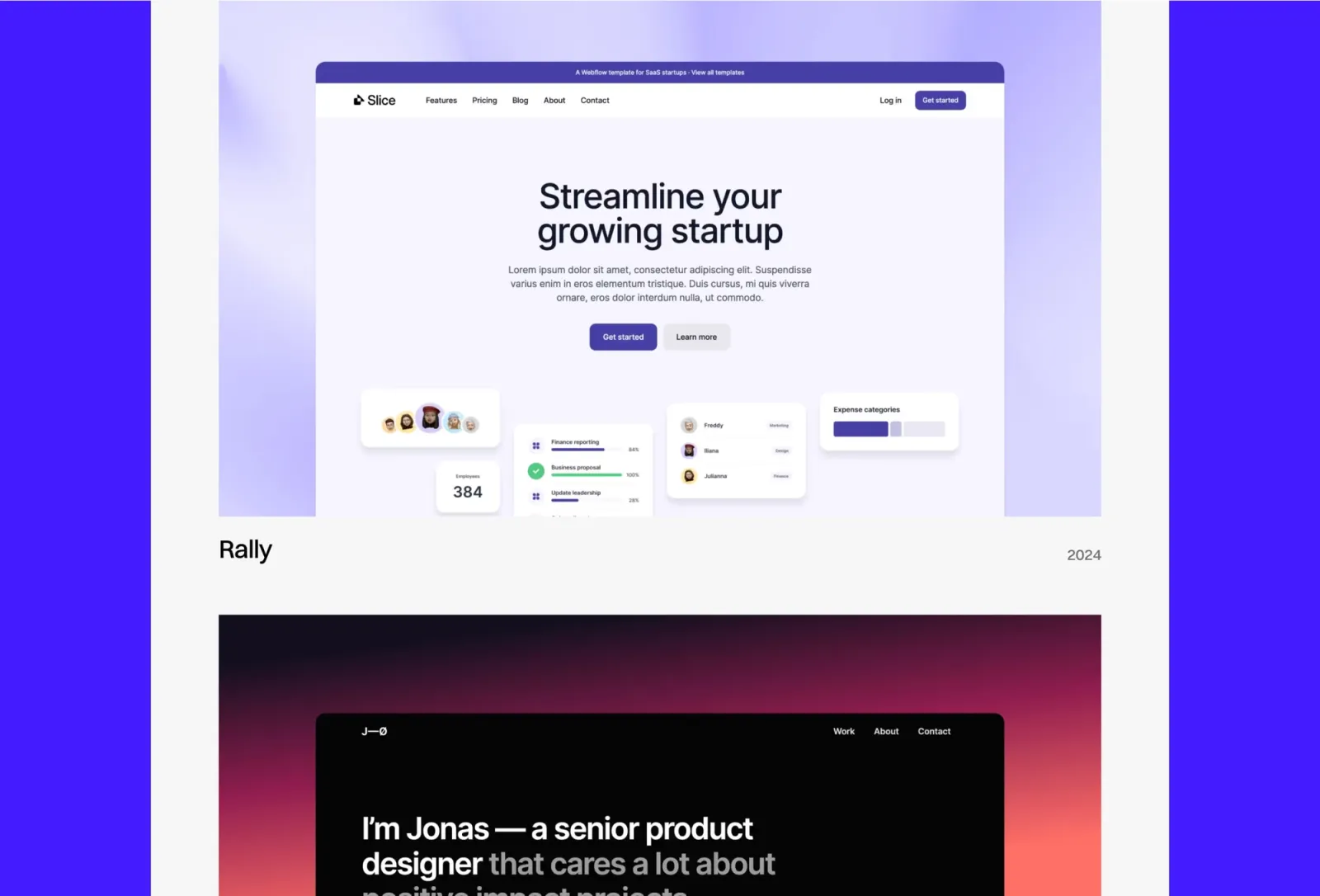
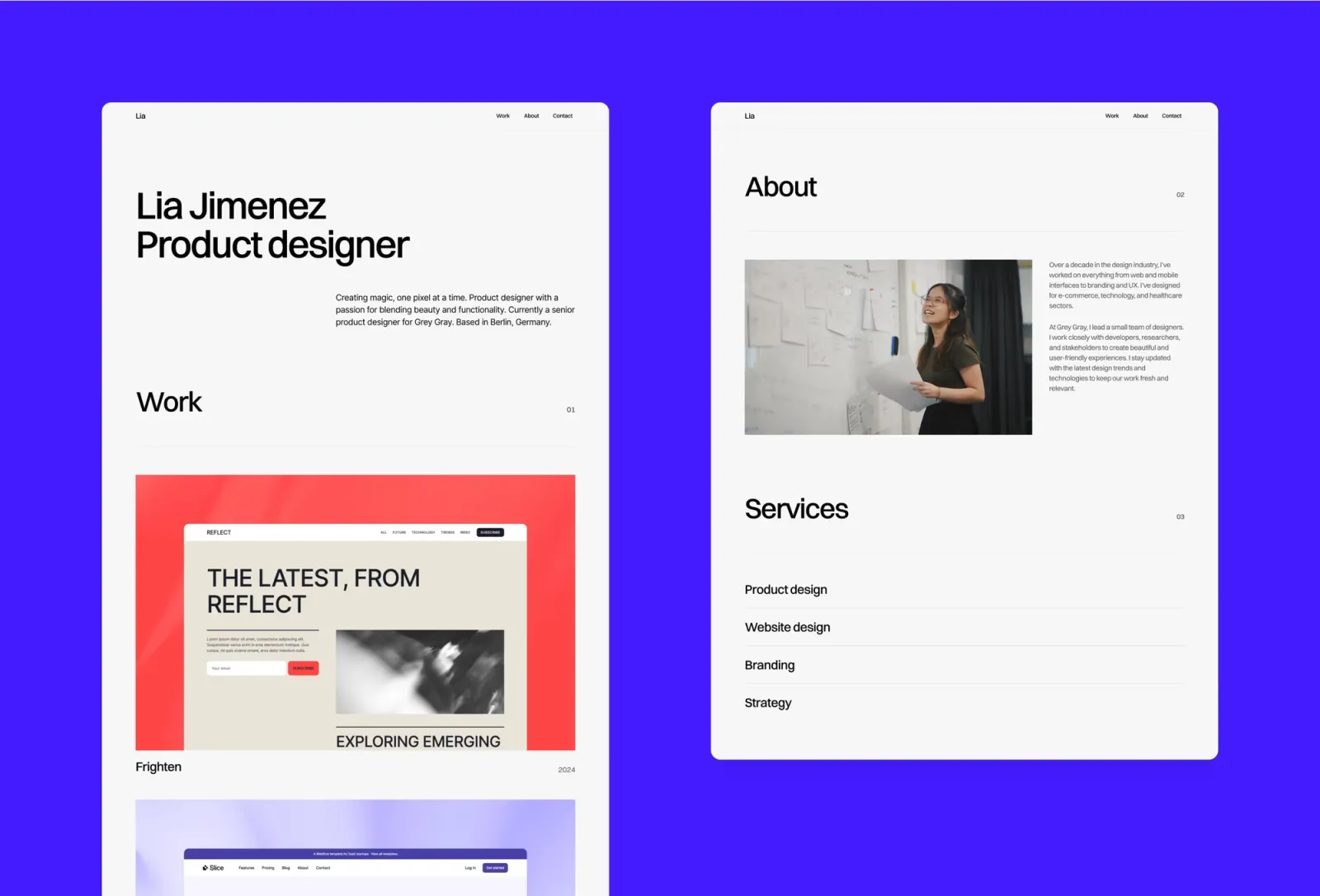
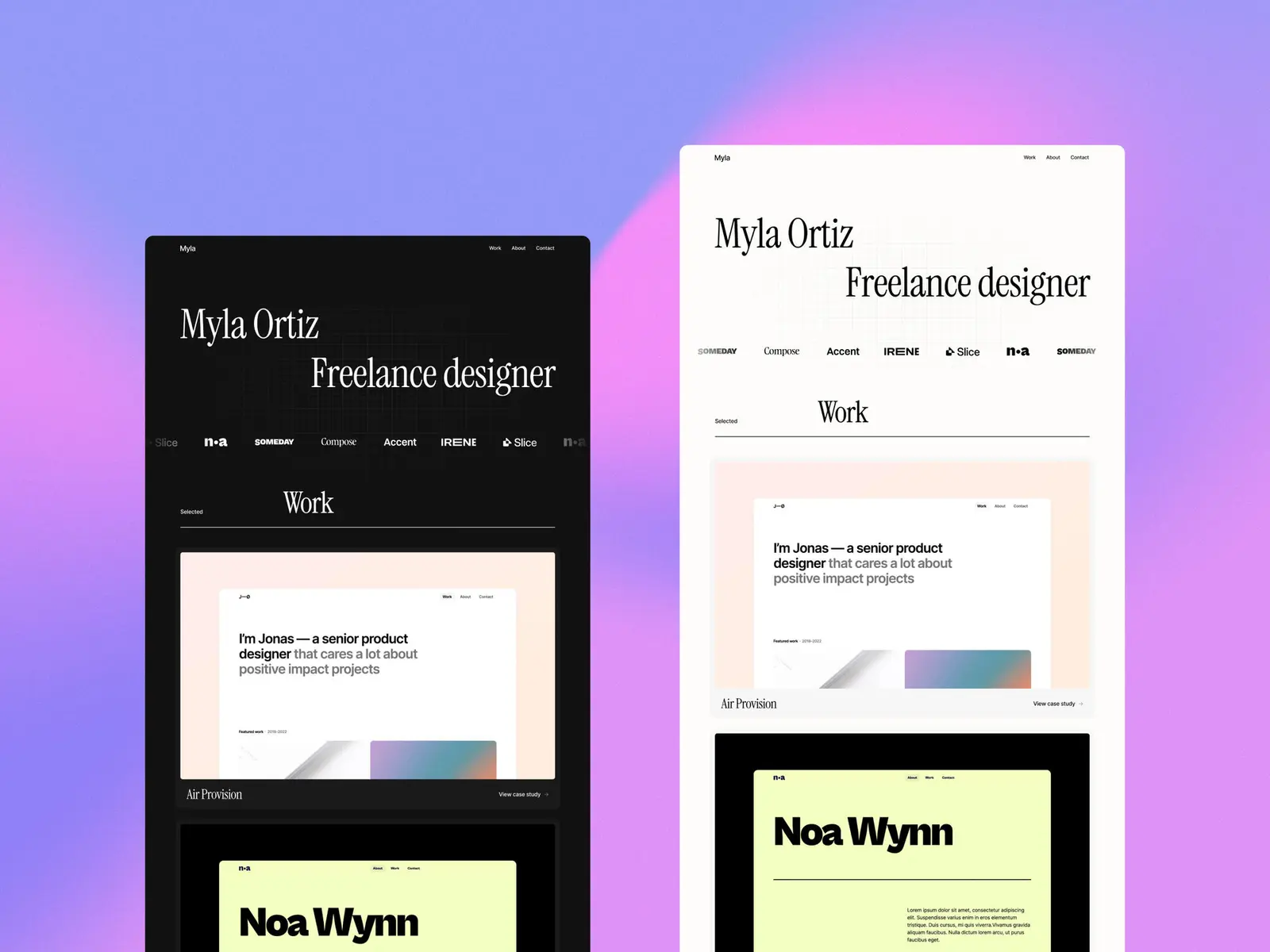
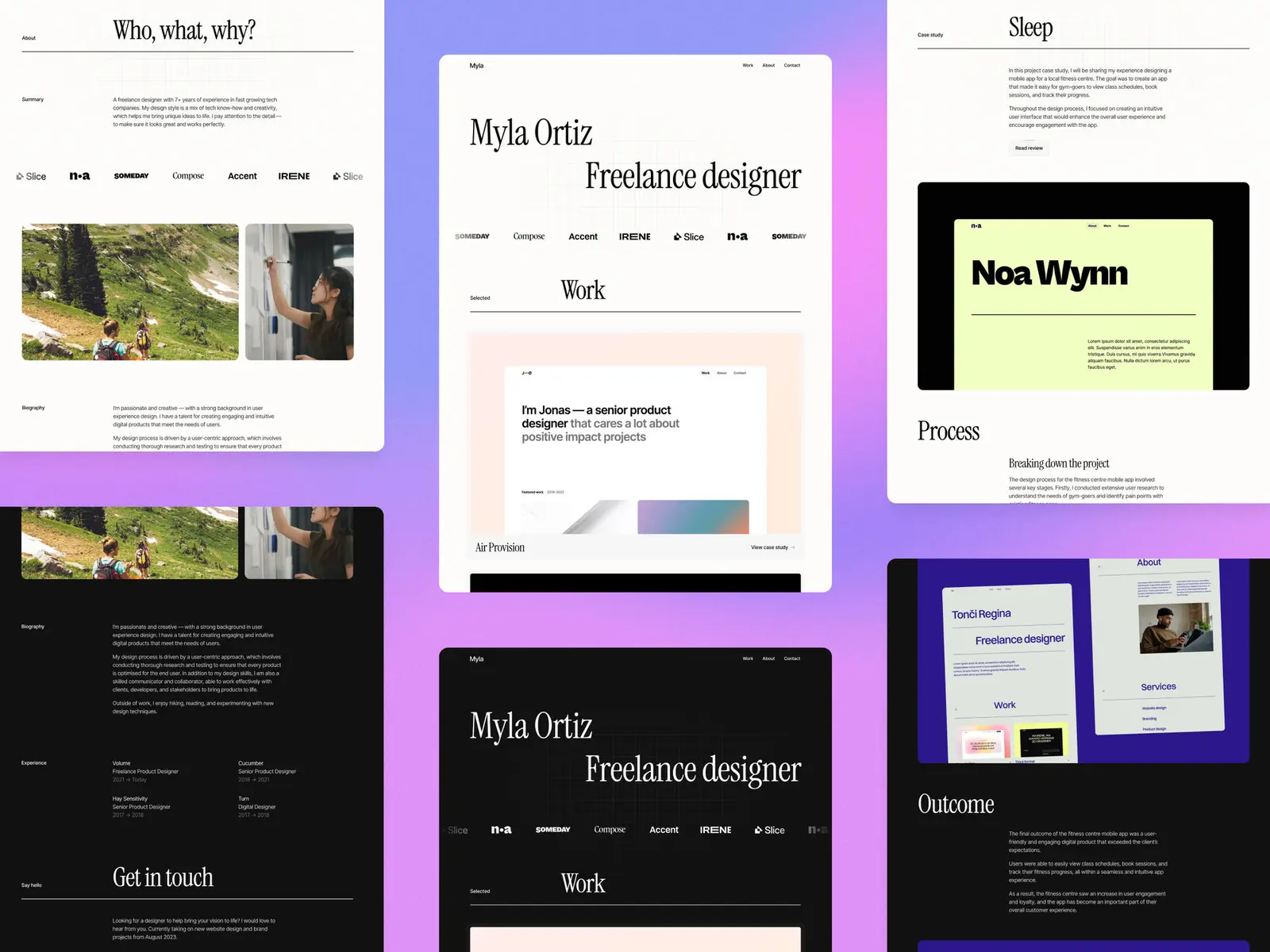
Jonas is a minimal one-page portfolio built for product designers. The bento grid layout organises work, bio, and contact into a single cohesive view — no buried pages, no navigation complexity. Built-in light and dark mode and smooth entrance animations keep it feeling current.
Product designers and UX professionals who want a contemporary one-page portfolio that covers work, bio, and contact without navigational friction.
$149 · Single site licence
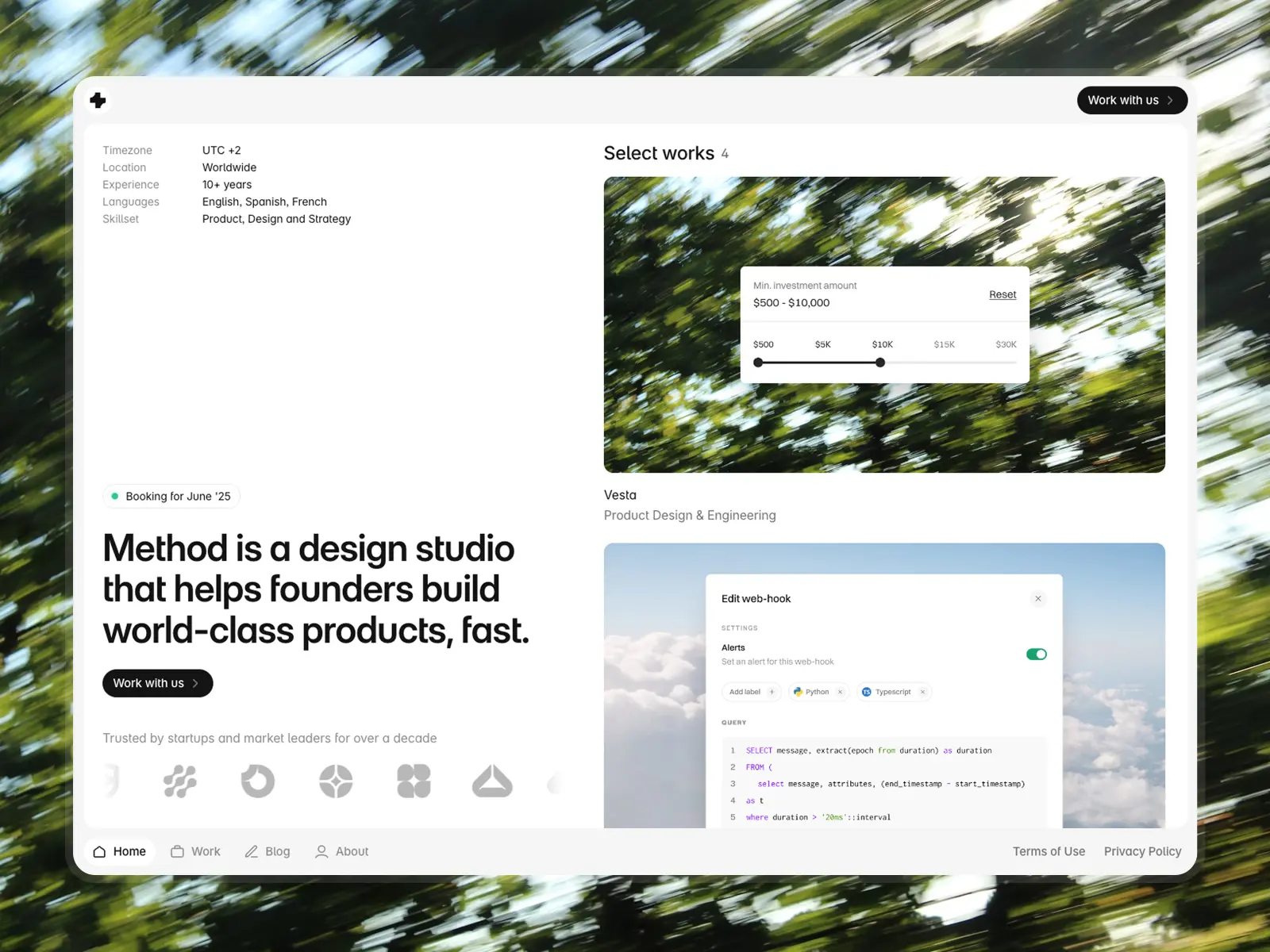
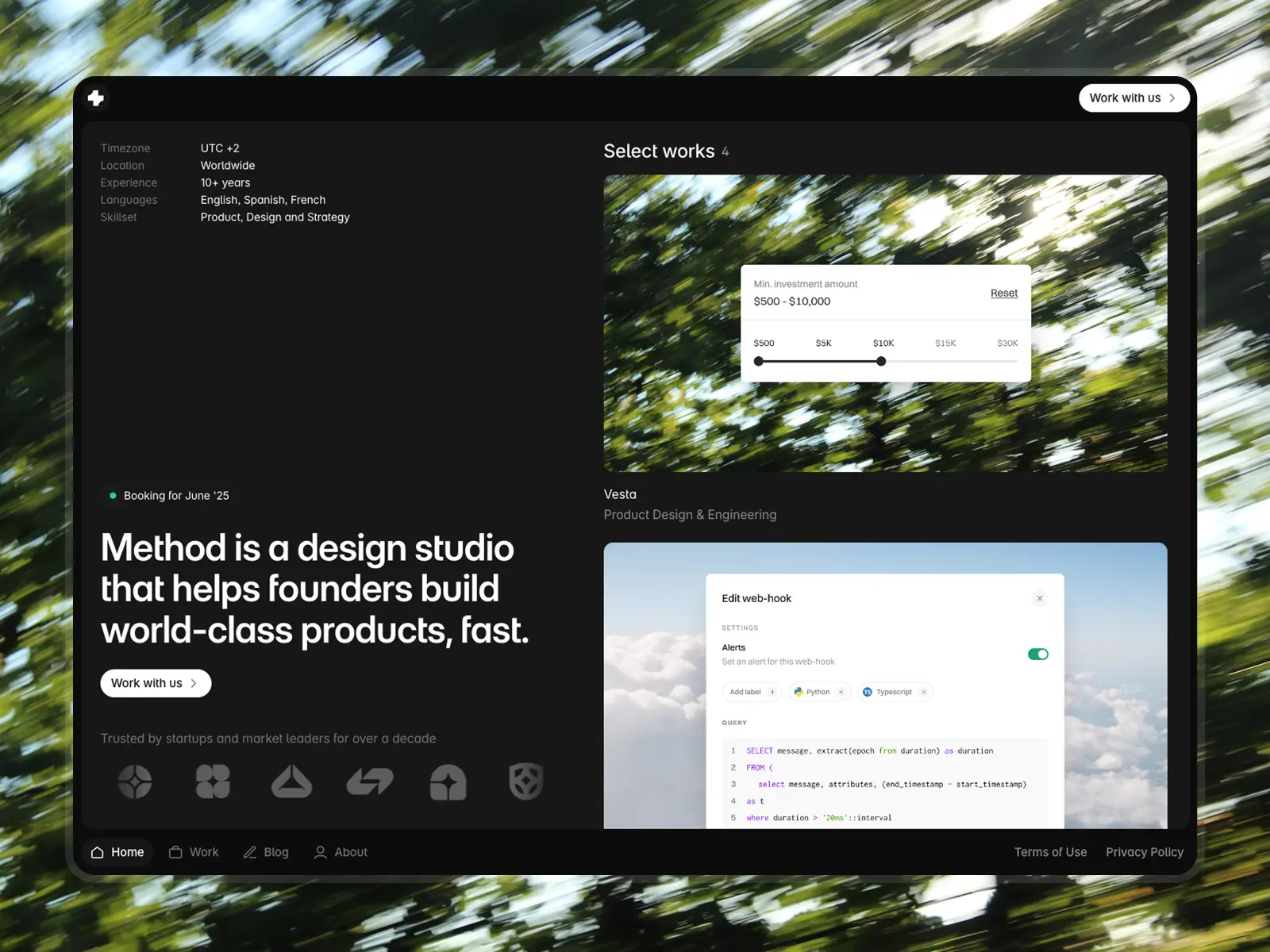
Method is a premium portfolio template with 40+ modular components, full CMS for case studies and blog posts, and built-in light and dark mode. The conversion-focused layout works equally as a portfolio or light agency site. Worth knowing: 40+ components is genuinely powerful, but it can feel overwhelming if you want a quick minimal setup — there’s a lot to explore before you land on your default layout.
Designers, creative studios, and freelancers who want a premium portfolio that can grow into an agency site, with a comprehensive component library and long-term update support.
$129 · Single site licence · Lifetime updates
Sharp is a colourful, editorial portfolio with a full blog built in. The pastel palette and bold typographic hierarchy give it a distinct personality, and the CMS handles both work and writing from a single editor. A strong pick for designers who publish as well as create.
Designers and creatives who want a portfolio that leads with personality and includes a built-in blog for thought leadership or case study writing.
$149 · Single site licence
Outlined is a free minimal portfolio template with six pages, full CMS, and a built-in Cal.com scheduling integration that turns the portfolio into a booking funnel. Being free, the component system is less developed than paid templates on this list — but as a no-cost starting point for testing a portfolio before committing, nothing beats it.
Designers, consultants, and service providers who want a clean portfolio that converts visitors to booked meetings — and want to launch without paying for a template.
Free
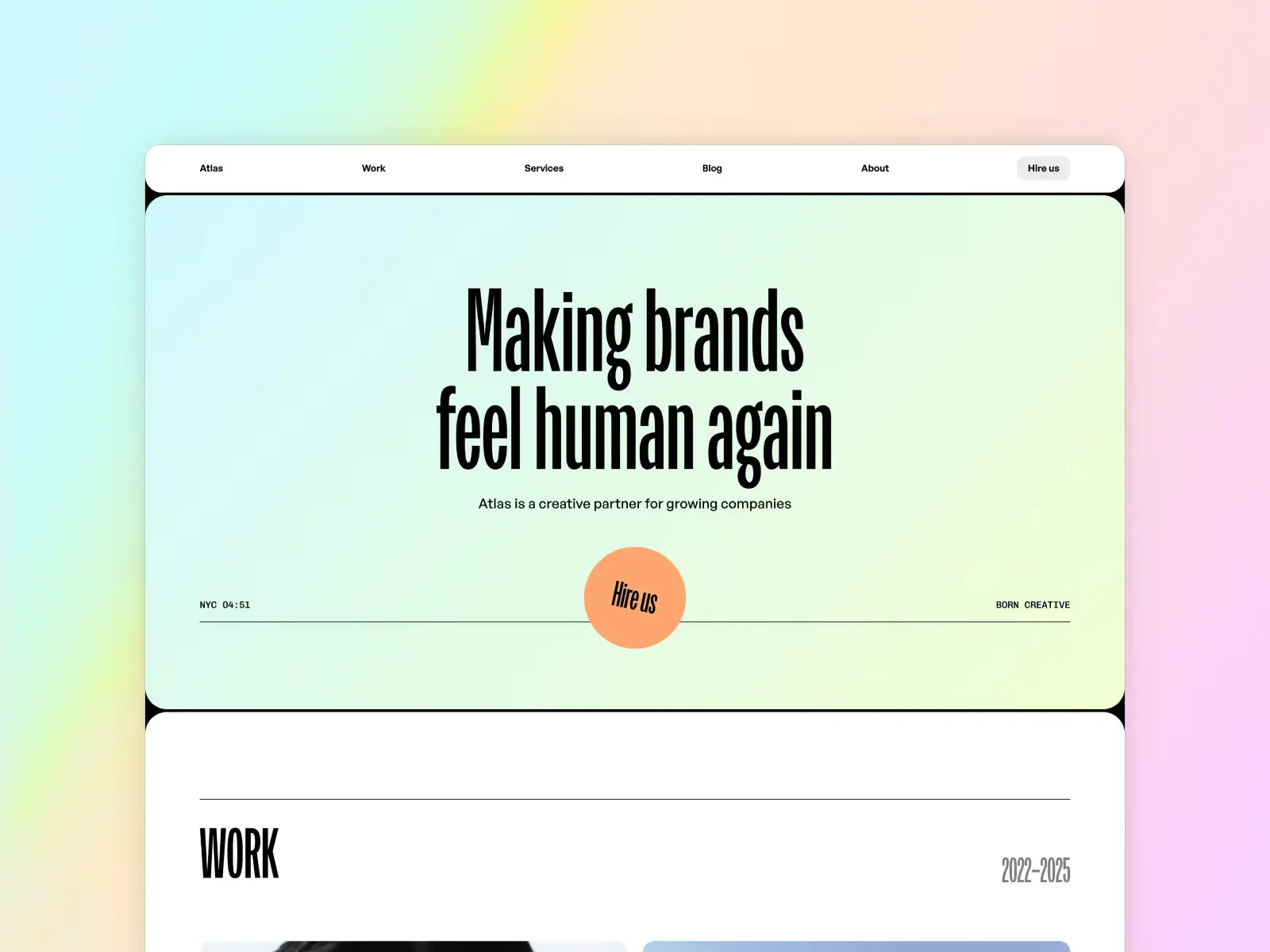
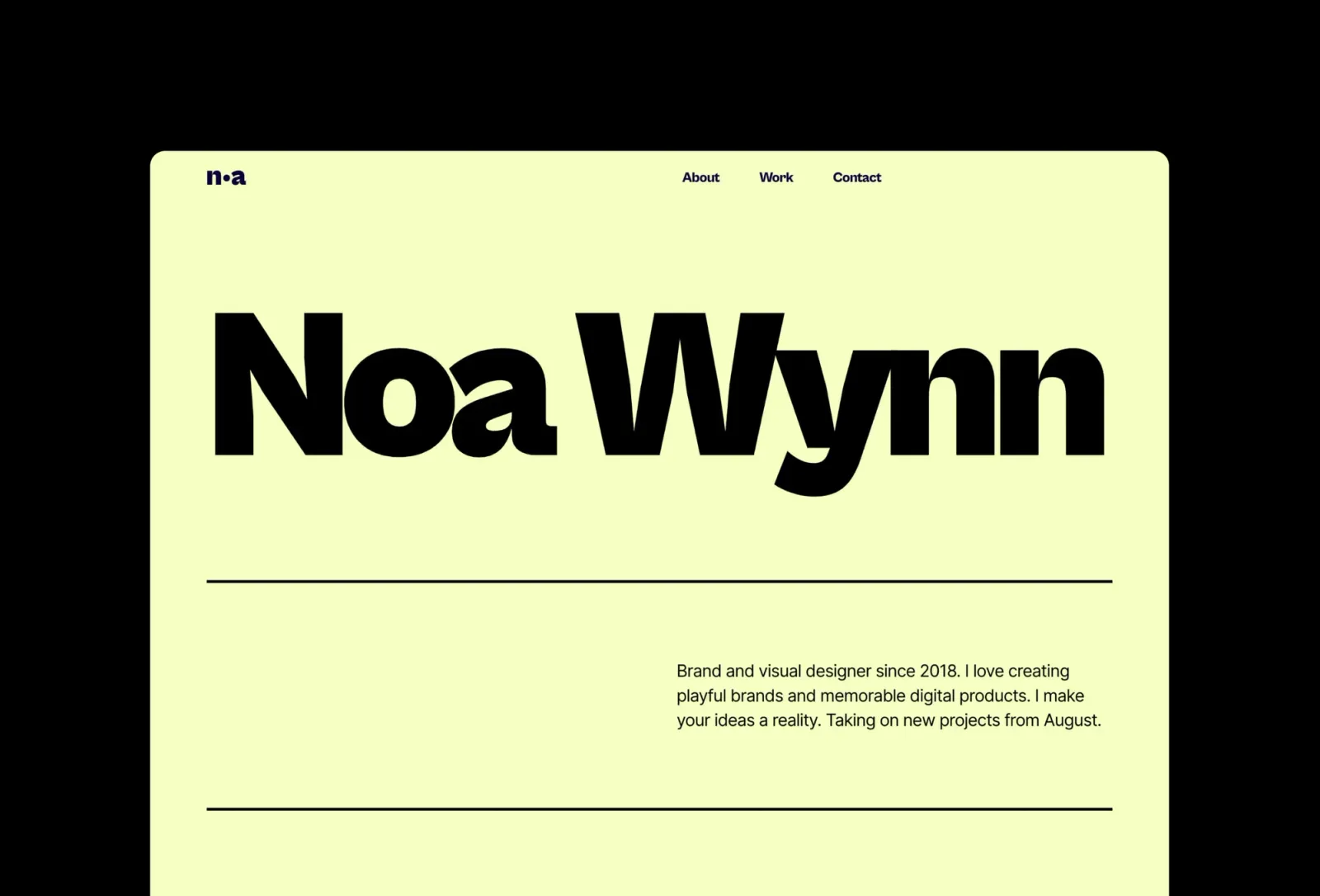
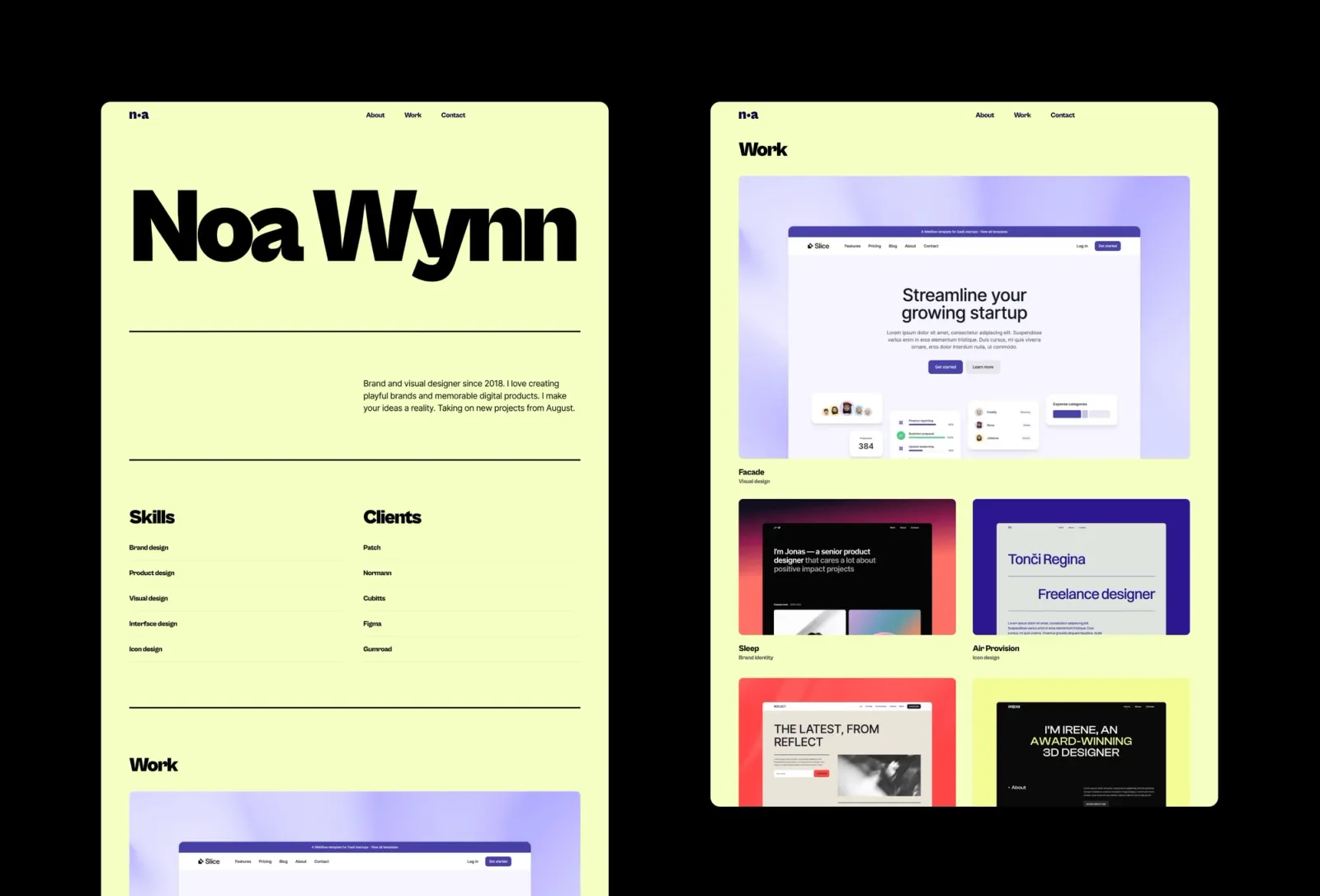
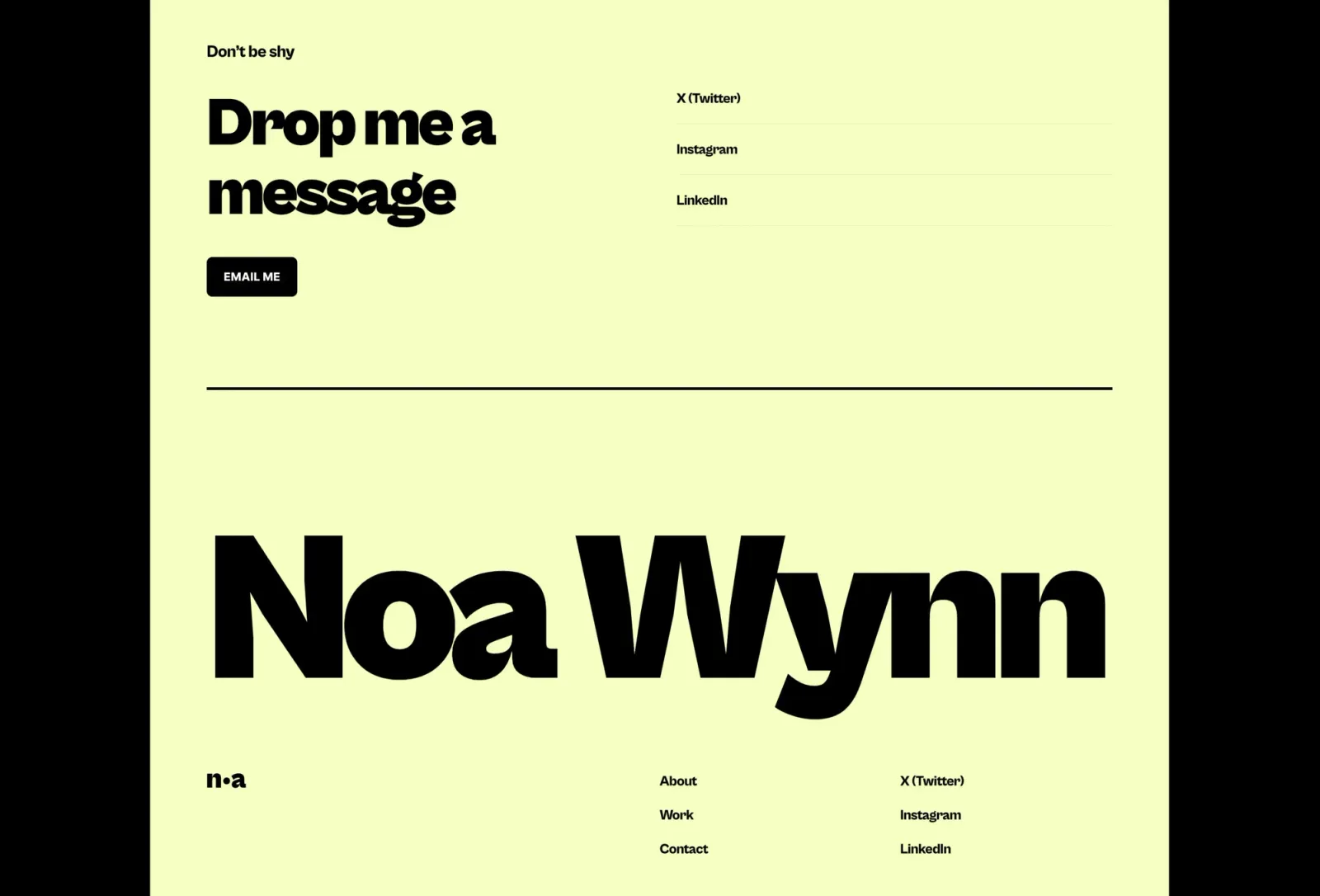
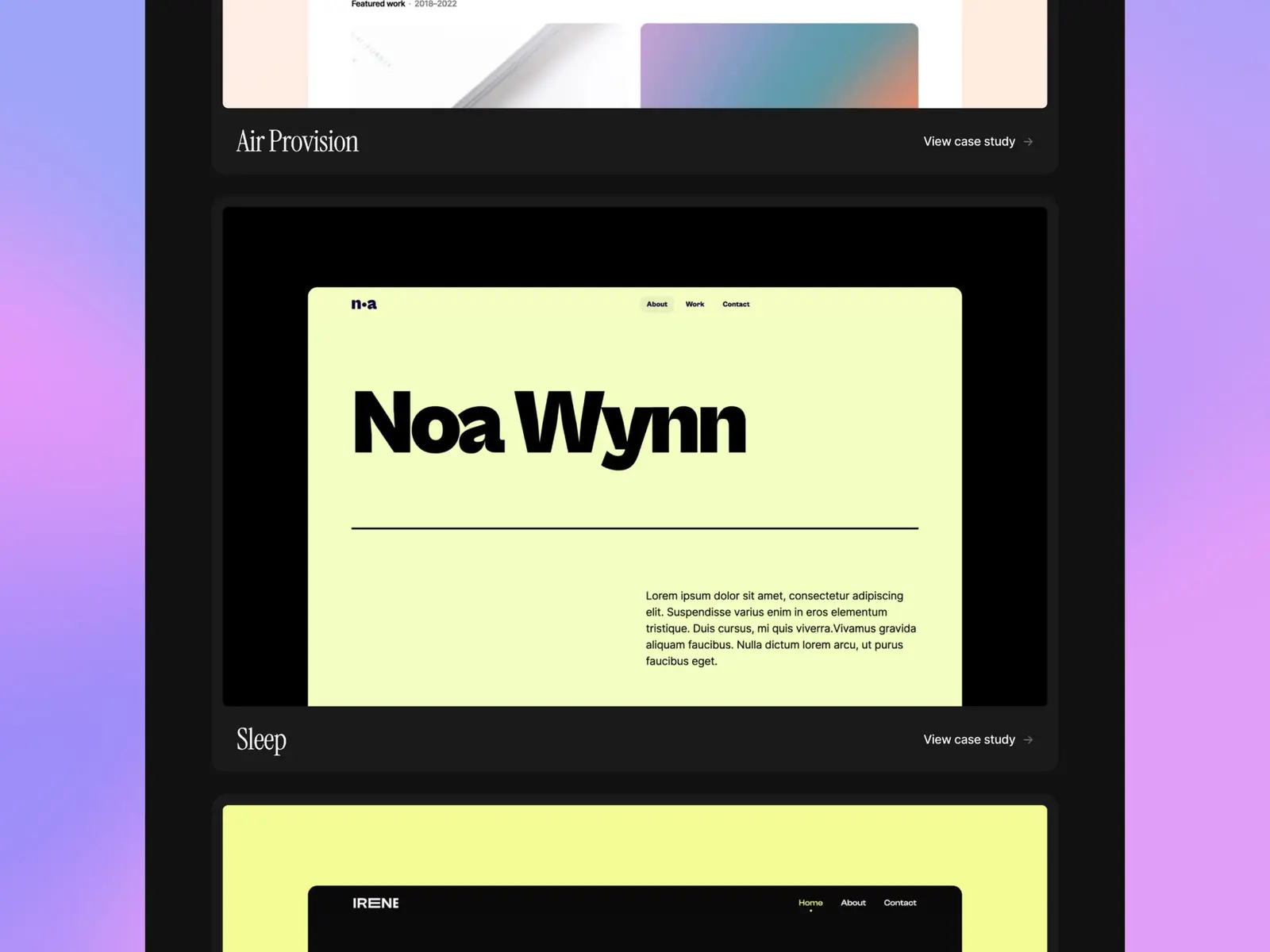
Wynn is a bold, colour-blocked one-pager that leads with personality. The large type, vibrant accent palette, and CMS-powered work grid compress everything into a single well-structured scroll. A good fit for designers who want their first impression to be memorable rather than safe.
Freelancers and independent designers who want a bold, characterful one-pager that stands out rather than fits in.
$149 · Single site licence
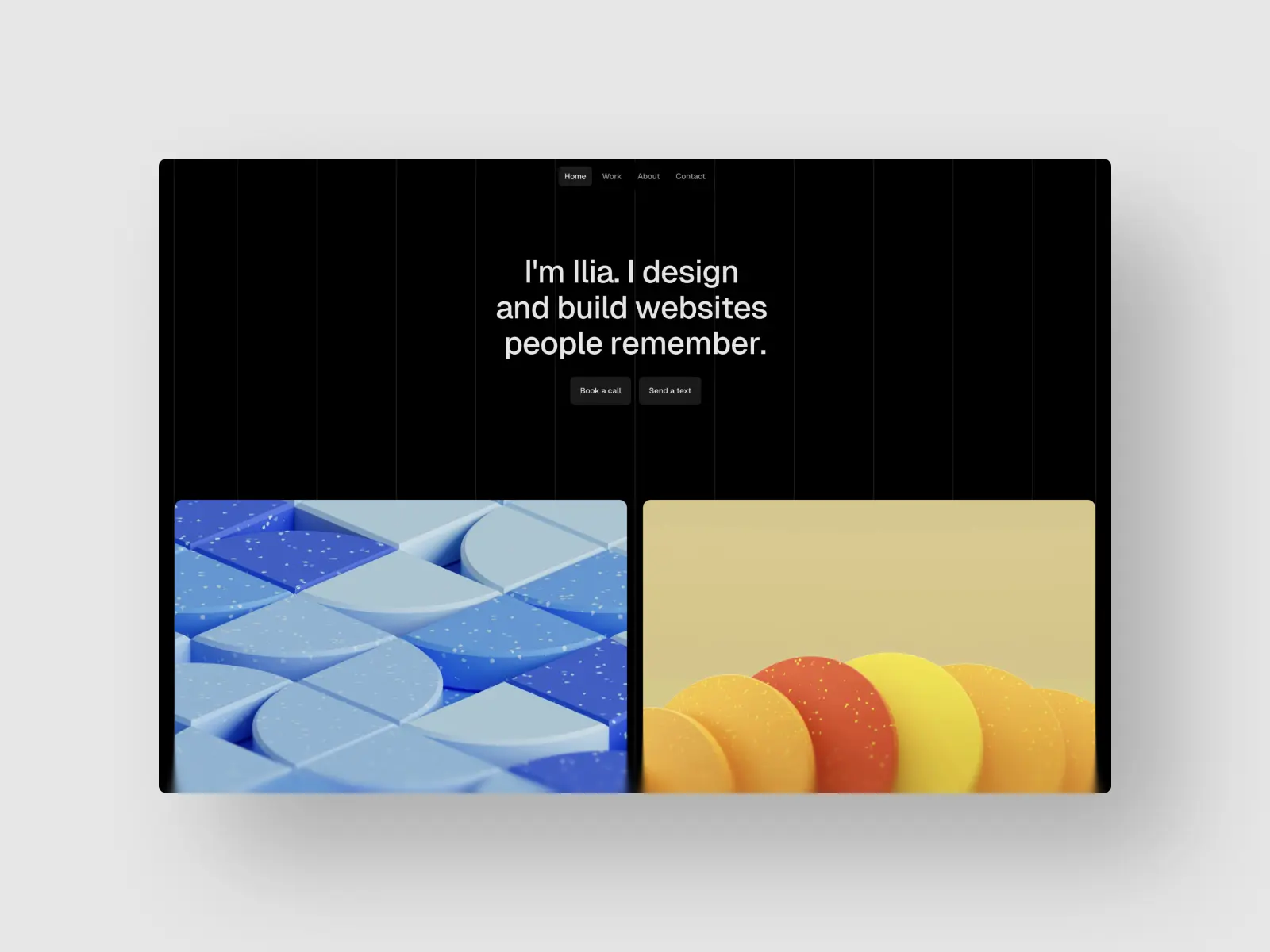
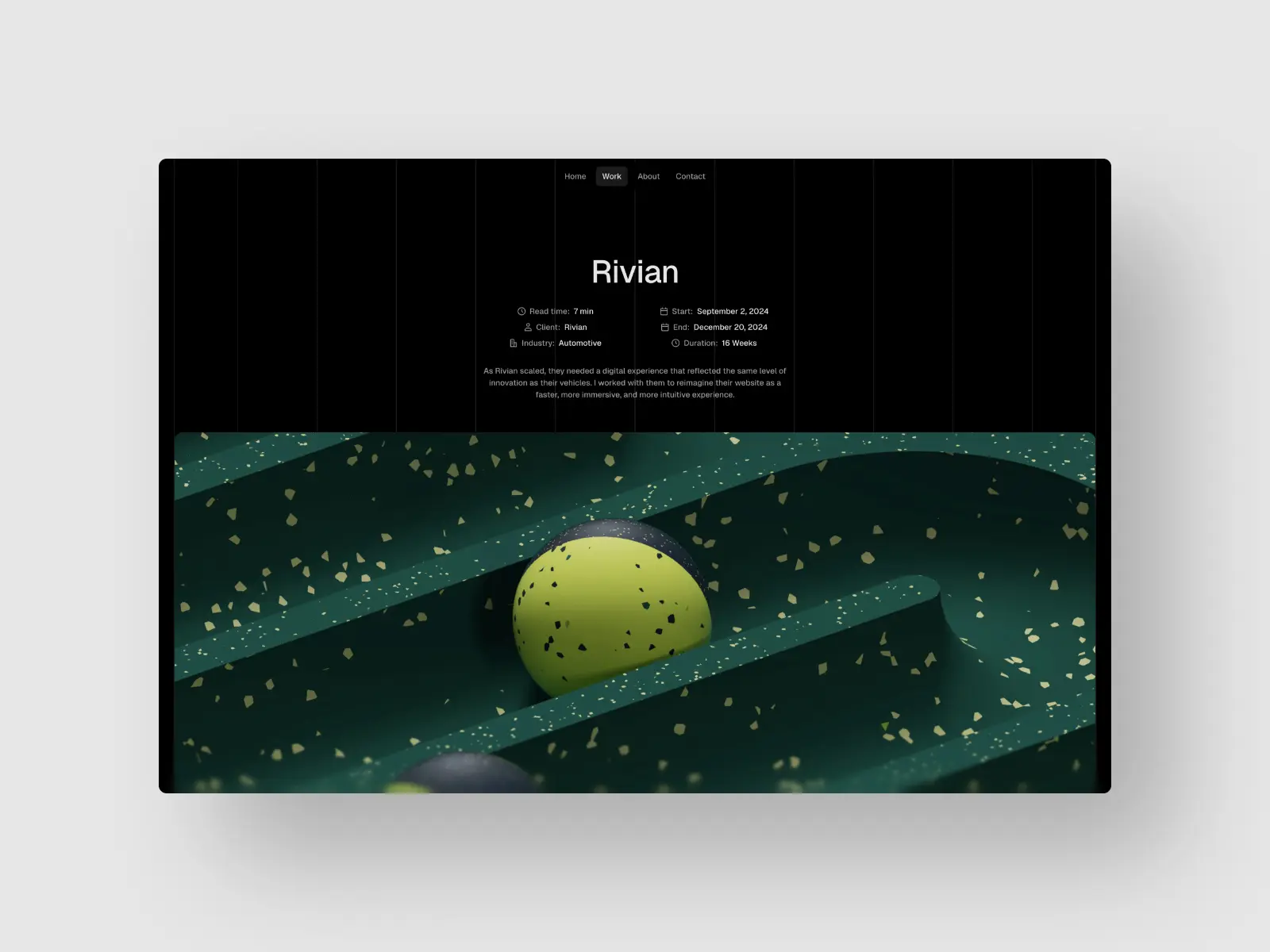
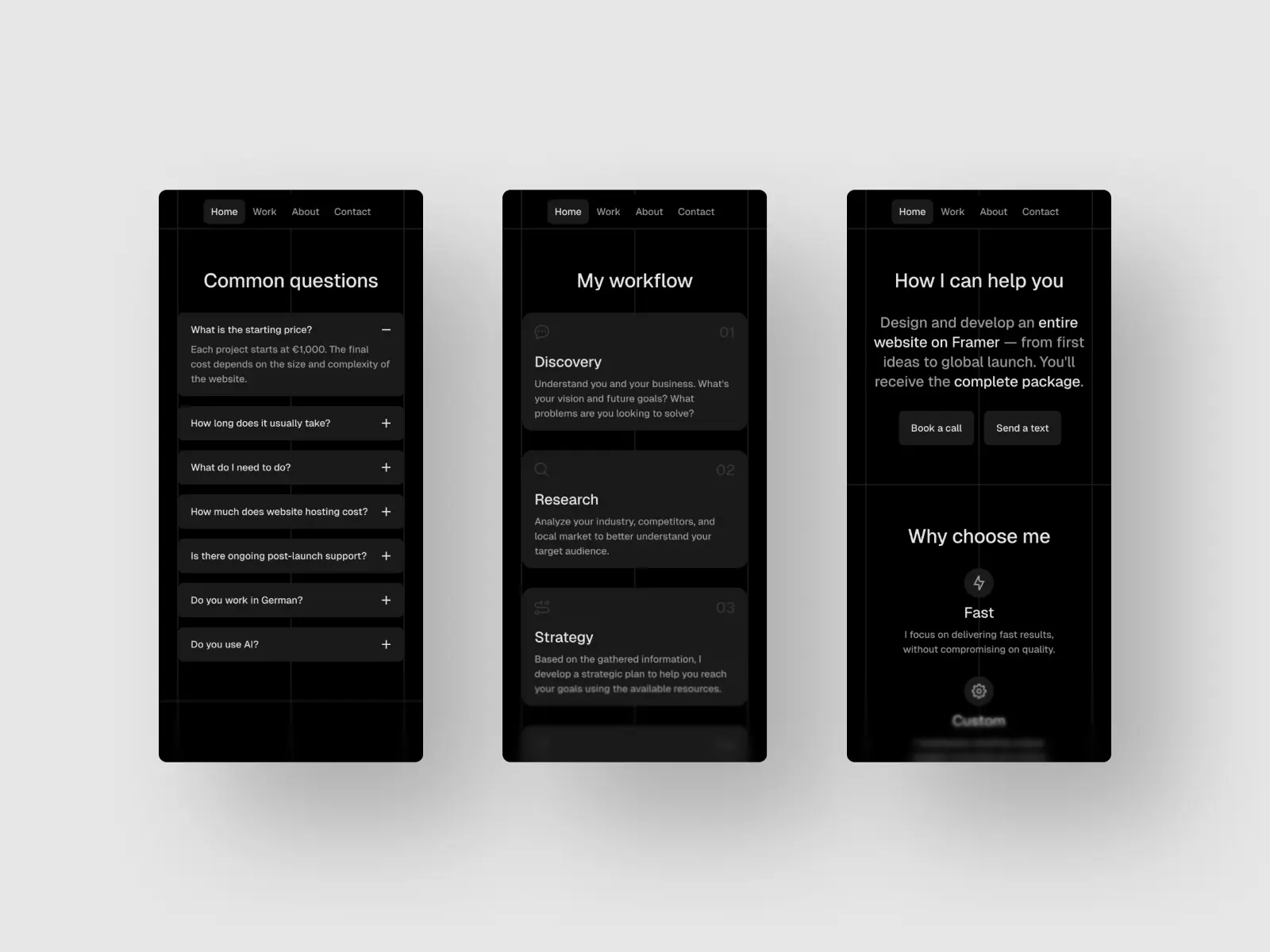
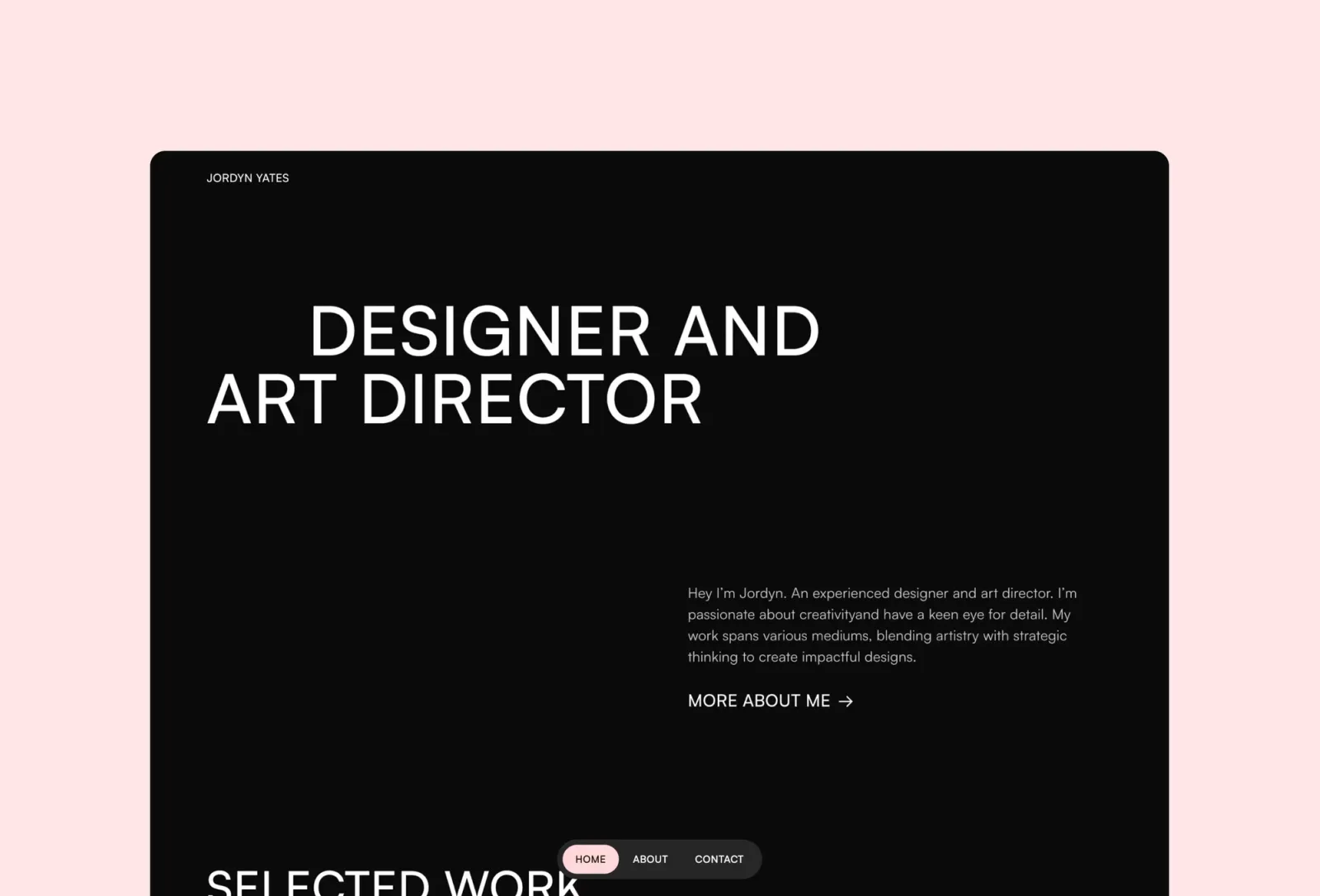
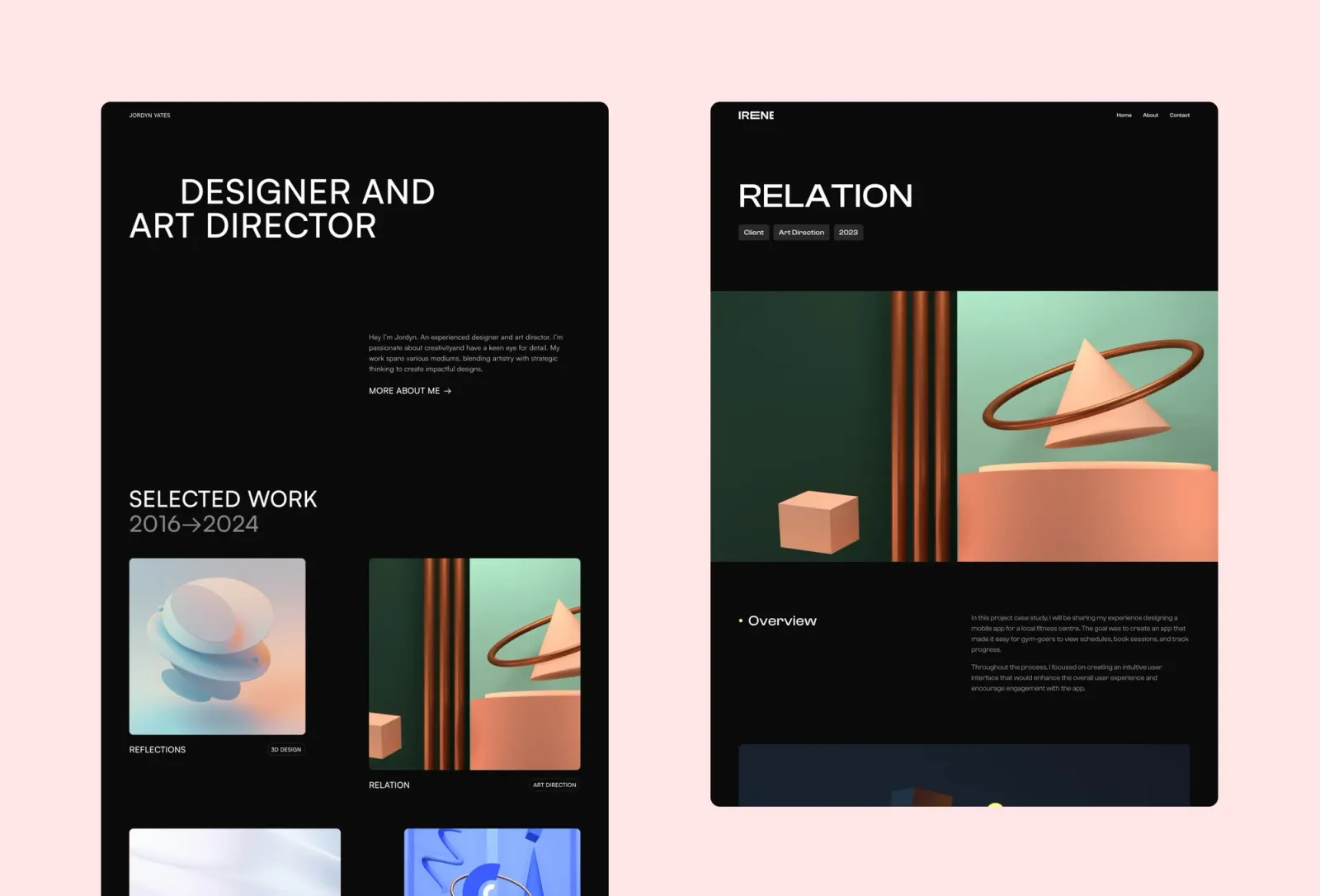
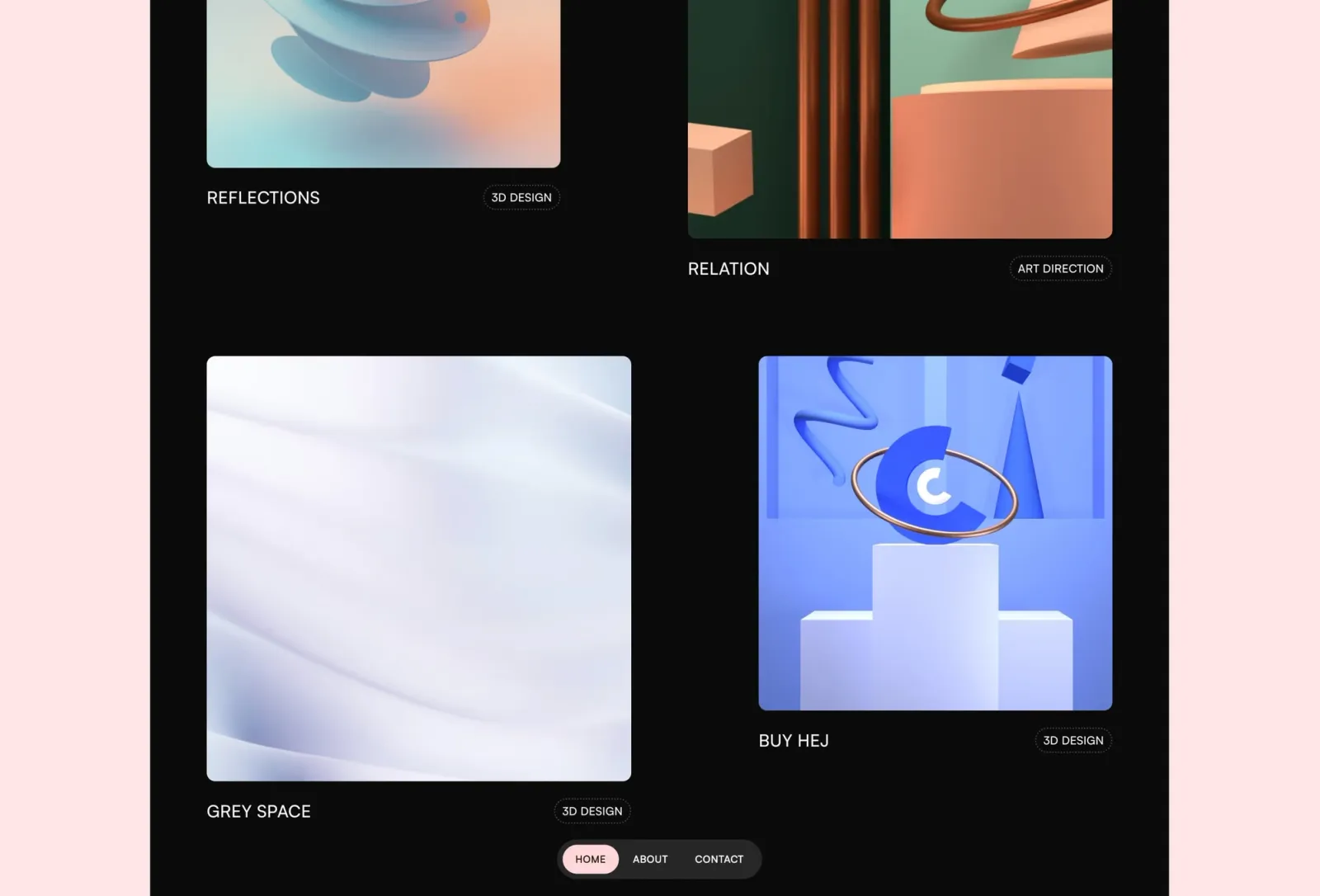
Darkfolio is a dark, minimal portfolio template that makes work look cinematic. The high-contrast layout draws attention directly to project imagery and outcomes. Similar dark-mode territory to Offset in the agency list, but more compact and faster to set up — Darkfolio is the portfolio-sized version of that idea.
Brand designers, motion designers, and visual creatives whose work looks best on a dark, high-contrast background.
$149 · Single site licence
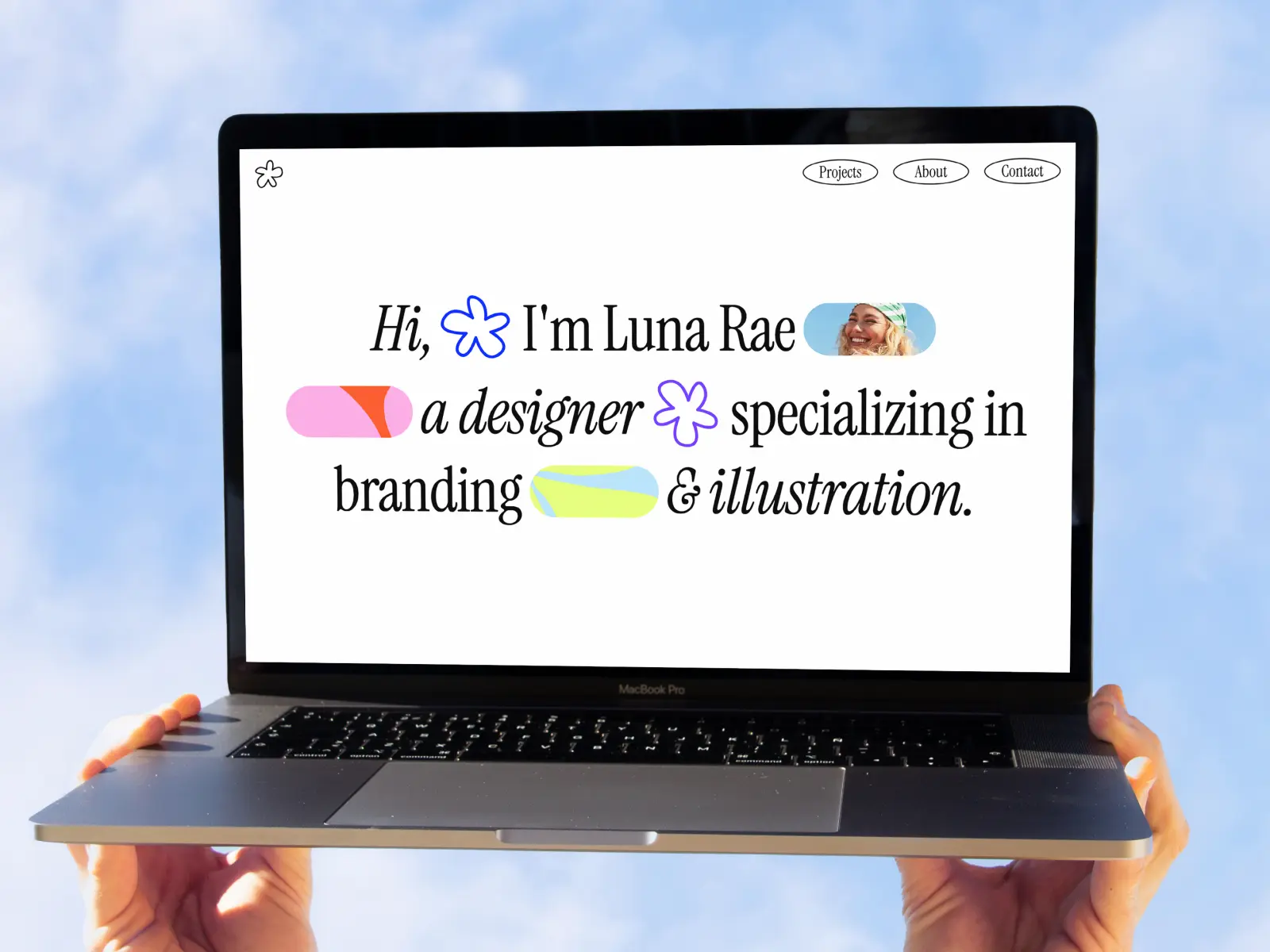
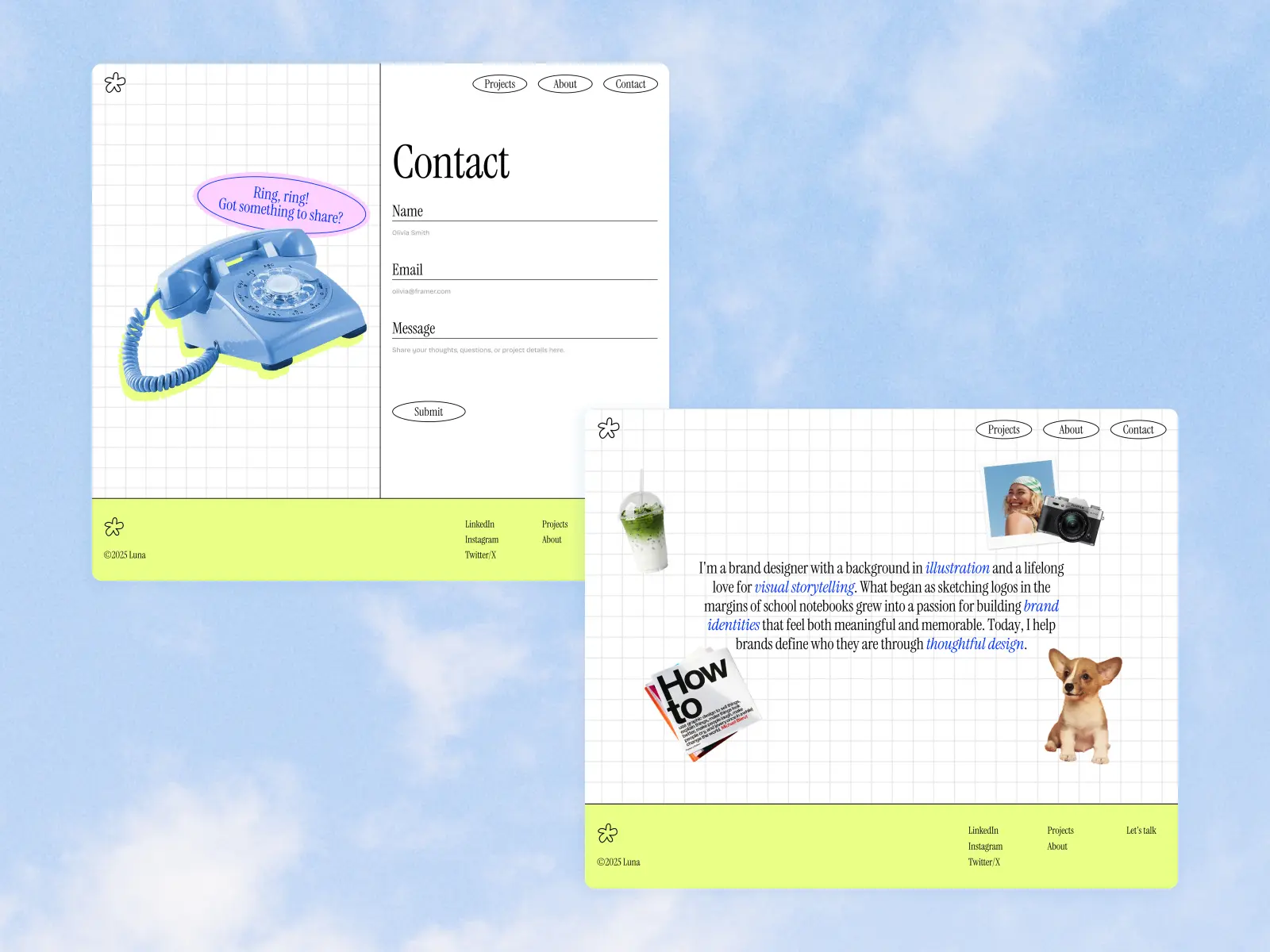
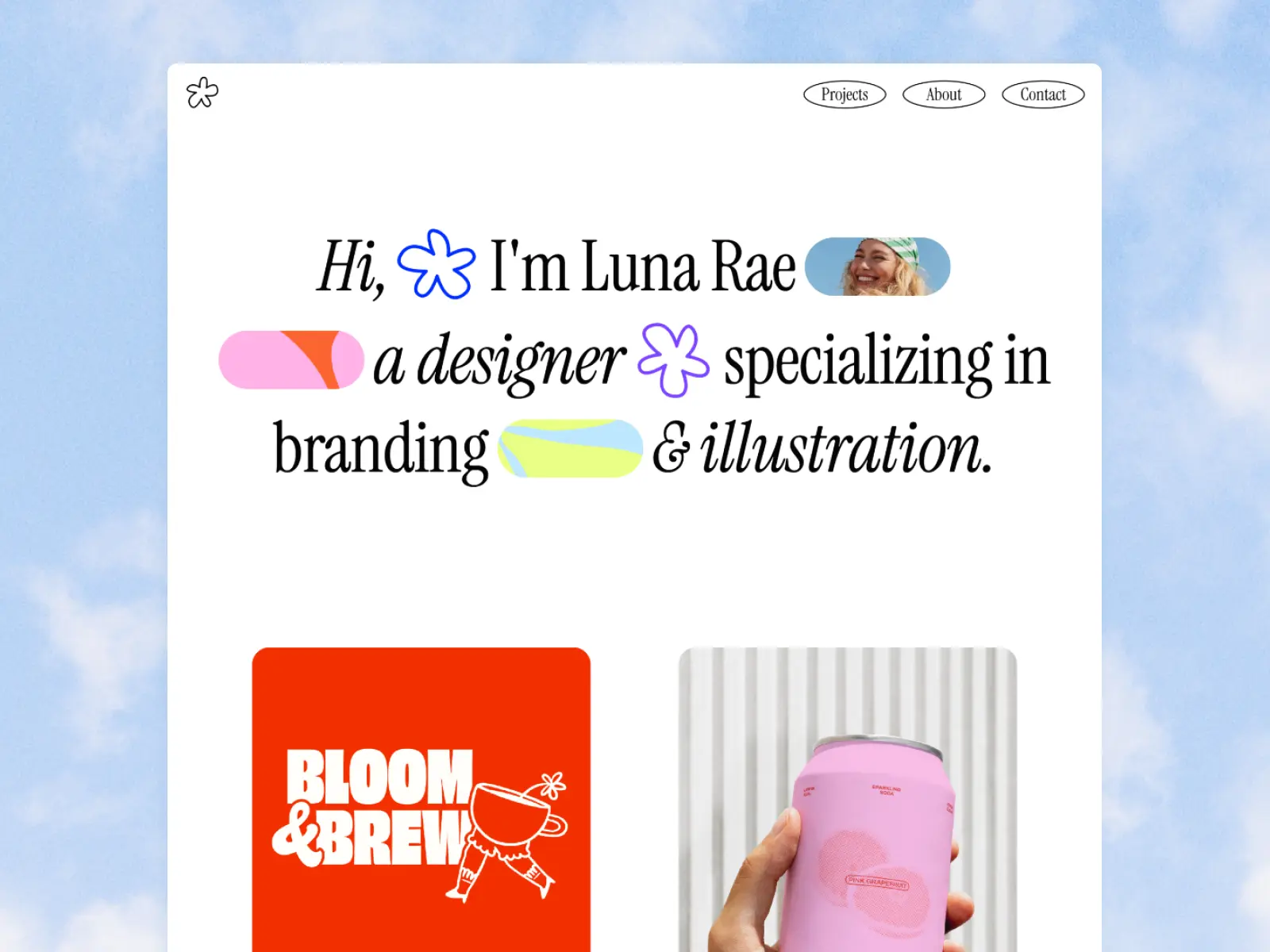
Luna is a vibrant, personality-driven portfolio template built around custom cursors, subtle animations, and a design that’s clean without being cold. The six-page layout covers projects, about, and contact with CMS-powered case studies. Worth knowing: there’s no blog section — if writing is part of your portfolio strategy, you’d need to build that out separately.
Creatives and designers who want a portfolio that has personality and polish — clean enough to feel professional, characterful enough to feel human.
$49 · Single site licence
Format is a clean, one-page portfolio with a card-based grid layout. It compresses your best work into a single, well-structured scroll — no buried pages, no navigation decisions for the visitor. A reliable choice for designers who want to launch fast without compromising on quality.
Freelance designers and creatives who want a focused, fast-to-launch one-pager that makes a strong impression without complexity.
$149 · Single site licence
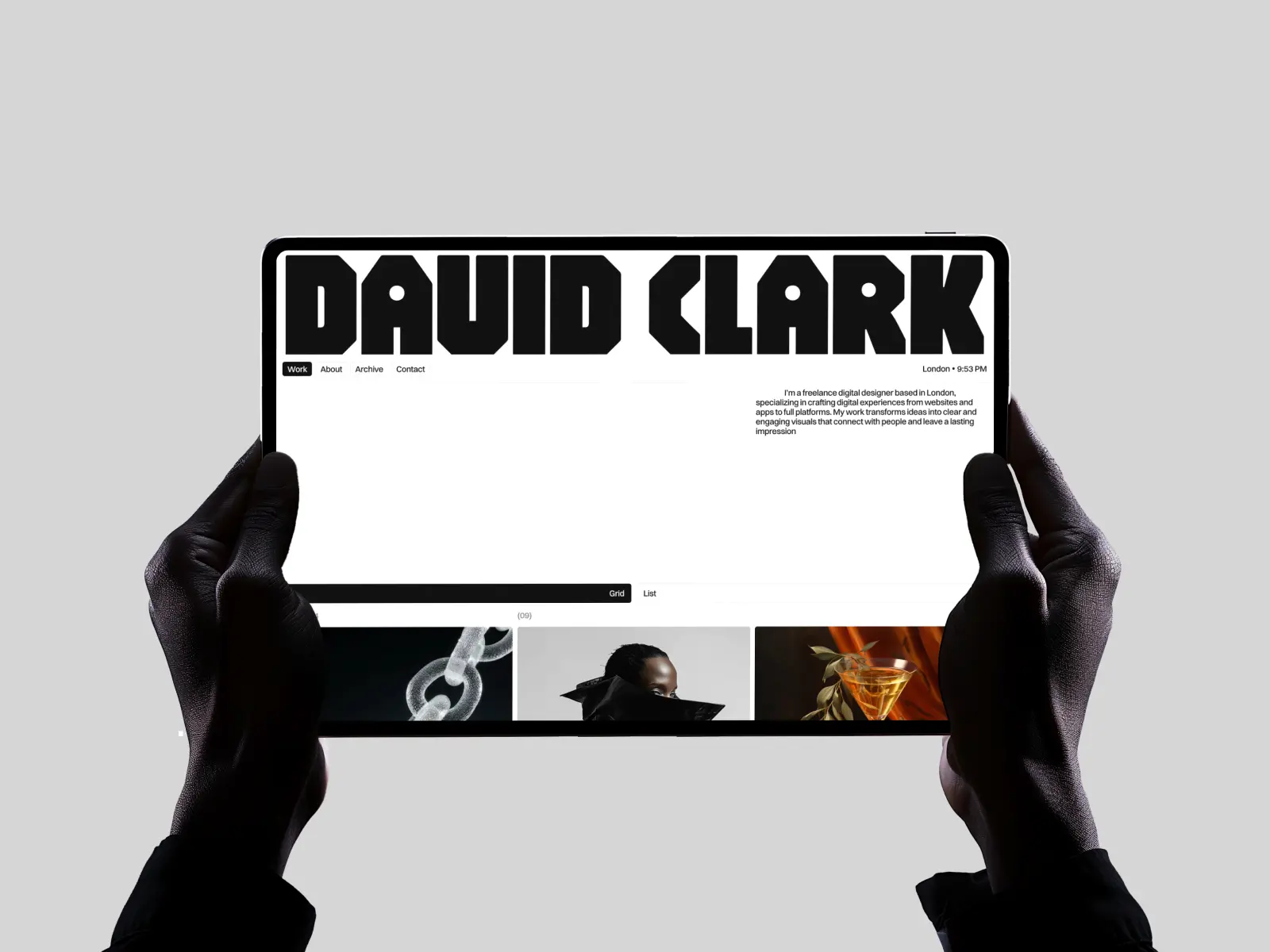
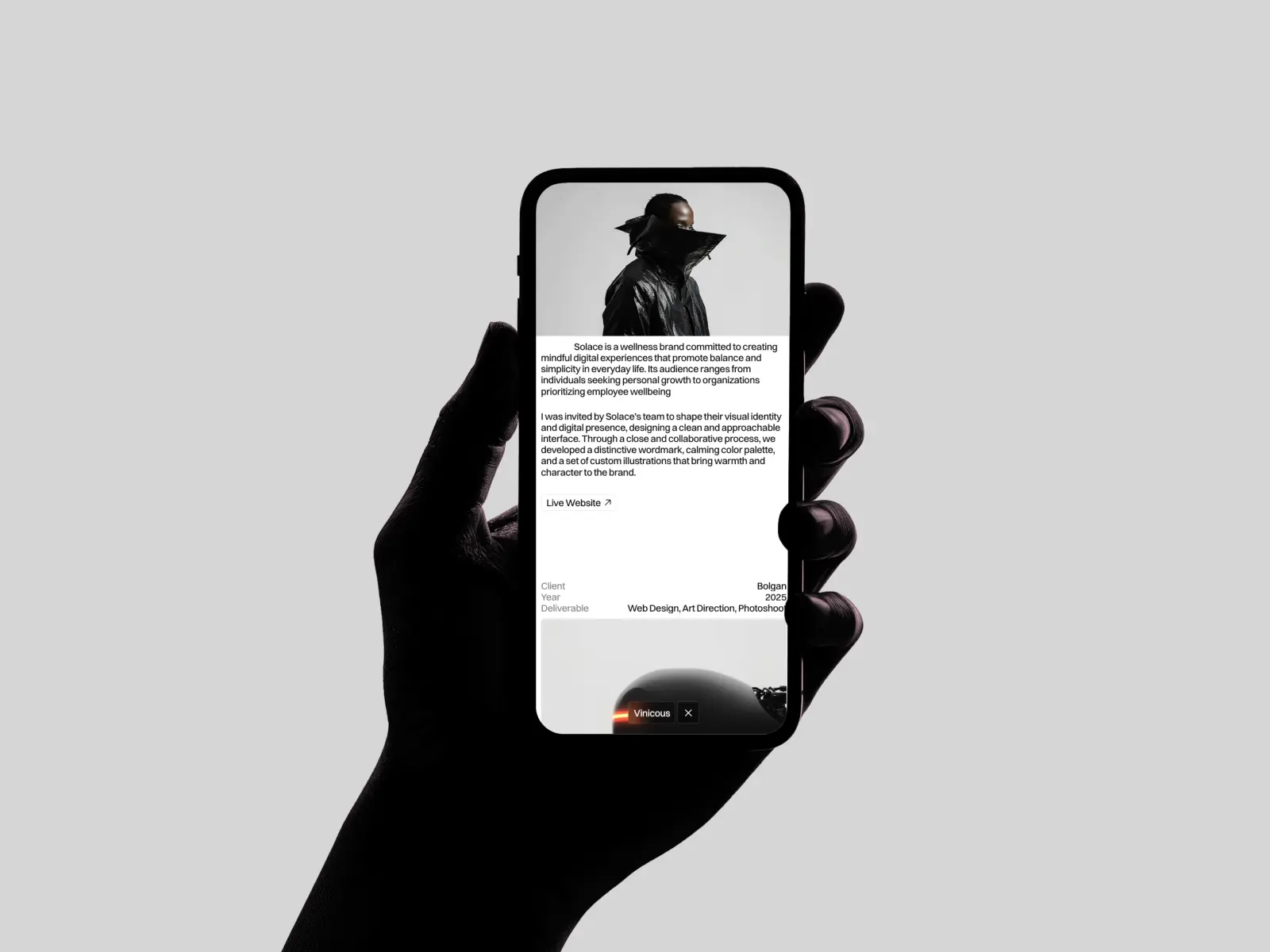
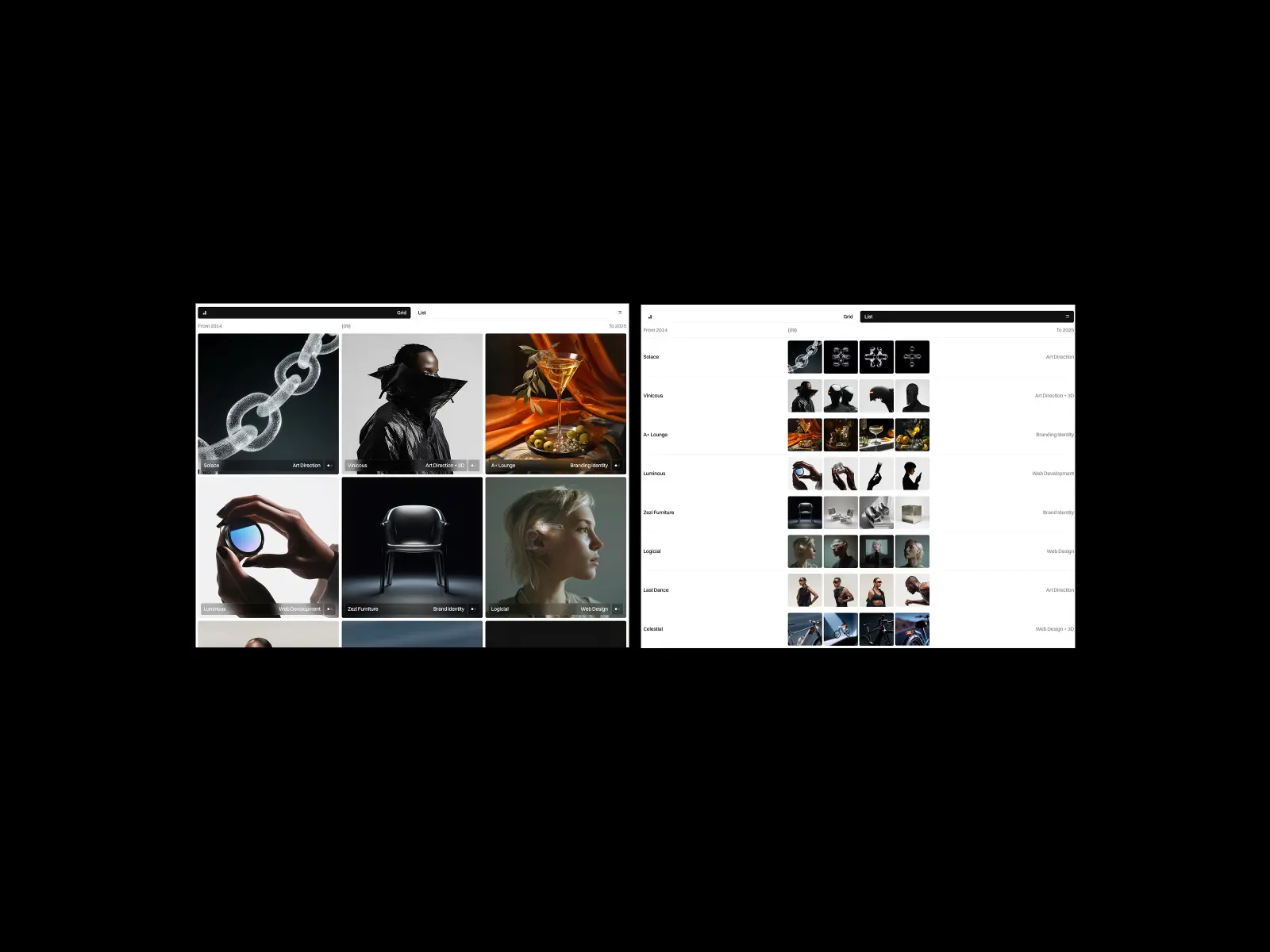
David Clark is the quietest portfolio template on this list. Six pages, type-led layout, and nothing that competes with the work — quieter even than Jonas or Format. The work archive page is a useful detail most minimal templates skip. Worth knowing: no animations, no dark mode, no blog. If you want any of those, this isn’t the template. Strong value at $39 for what it does.
$39 · Single site licence
Offset sits between a case-study site and a single-scroll portfolio. Six pages, a CMS-driven work section, and light and dark mode that follows the visitor’s system setting rather than a toggle they have to find. The page-load animation is the first thing most people notice.
Designers who want separate project pages rather than one long scroll, and who’d rather not build and maintain two colour themes by hand.
$149 · Single site licence
Lucid is the plainest portfolio on this list, and that’s the point. Seven pages, a CMS for work and writing both, and nothing decorative between the visitor and the projects. The blog is a real CMS section rather than one static page you edit by hand.
Freelance designers who write as well as ship. The blog is built in, so posts don’t need a second site or a Notion embed.
$149 · Single site licence
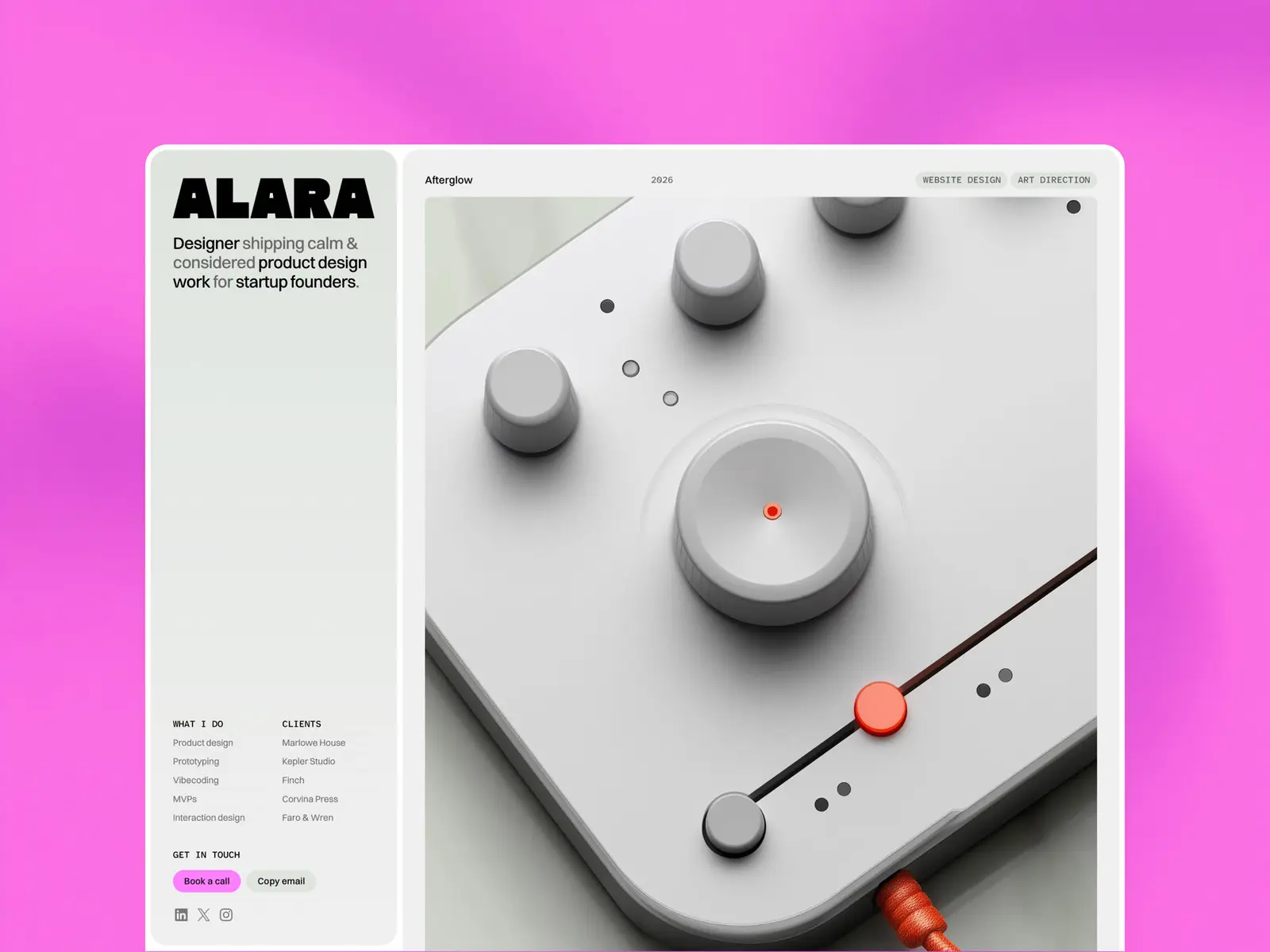
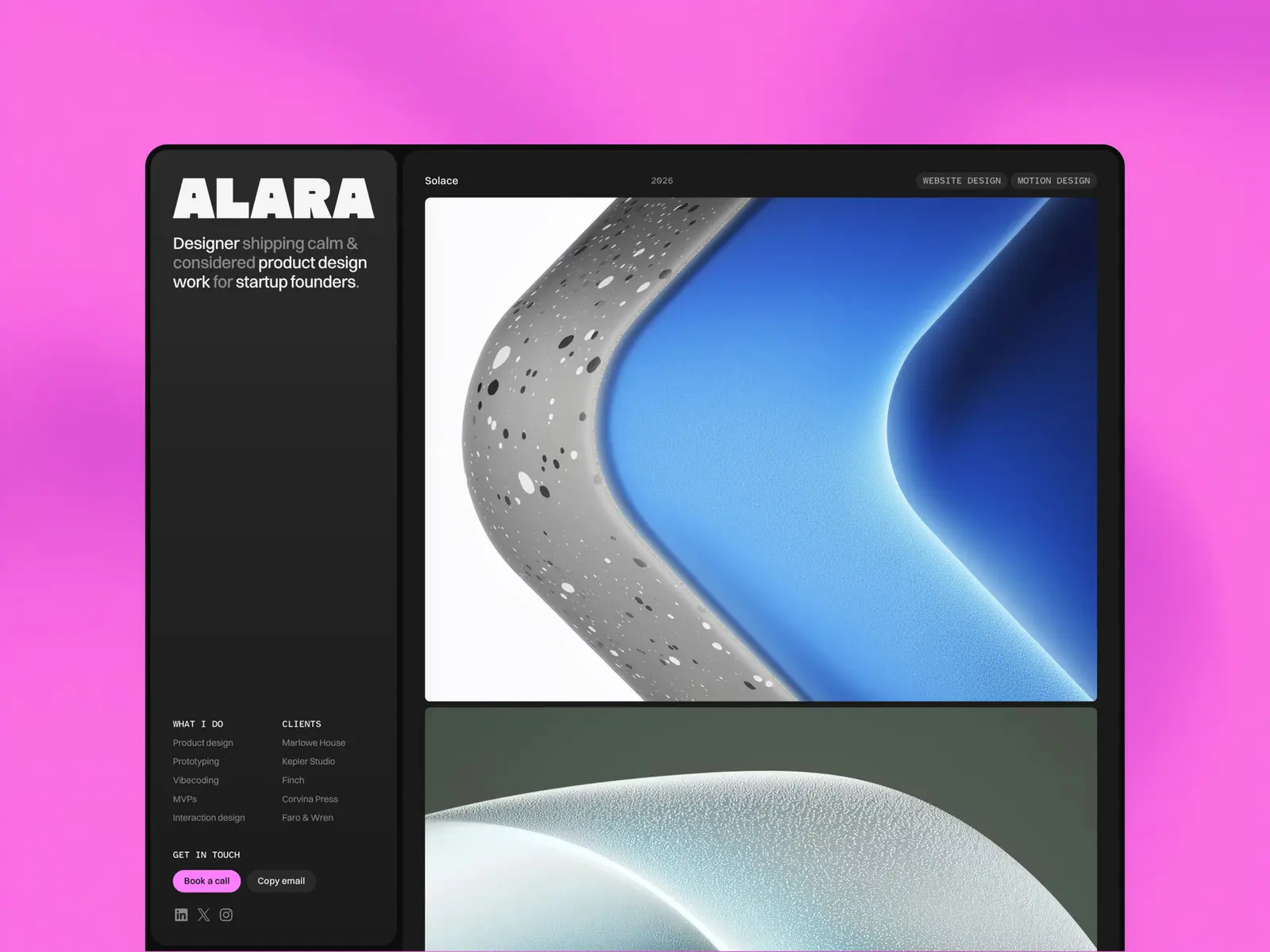
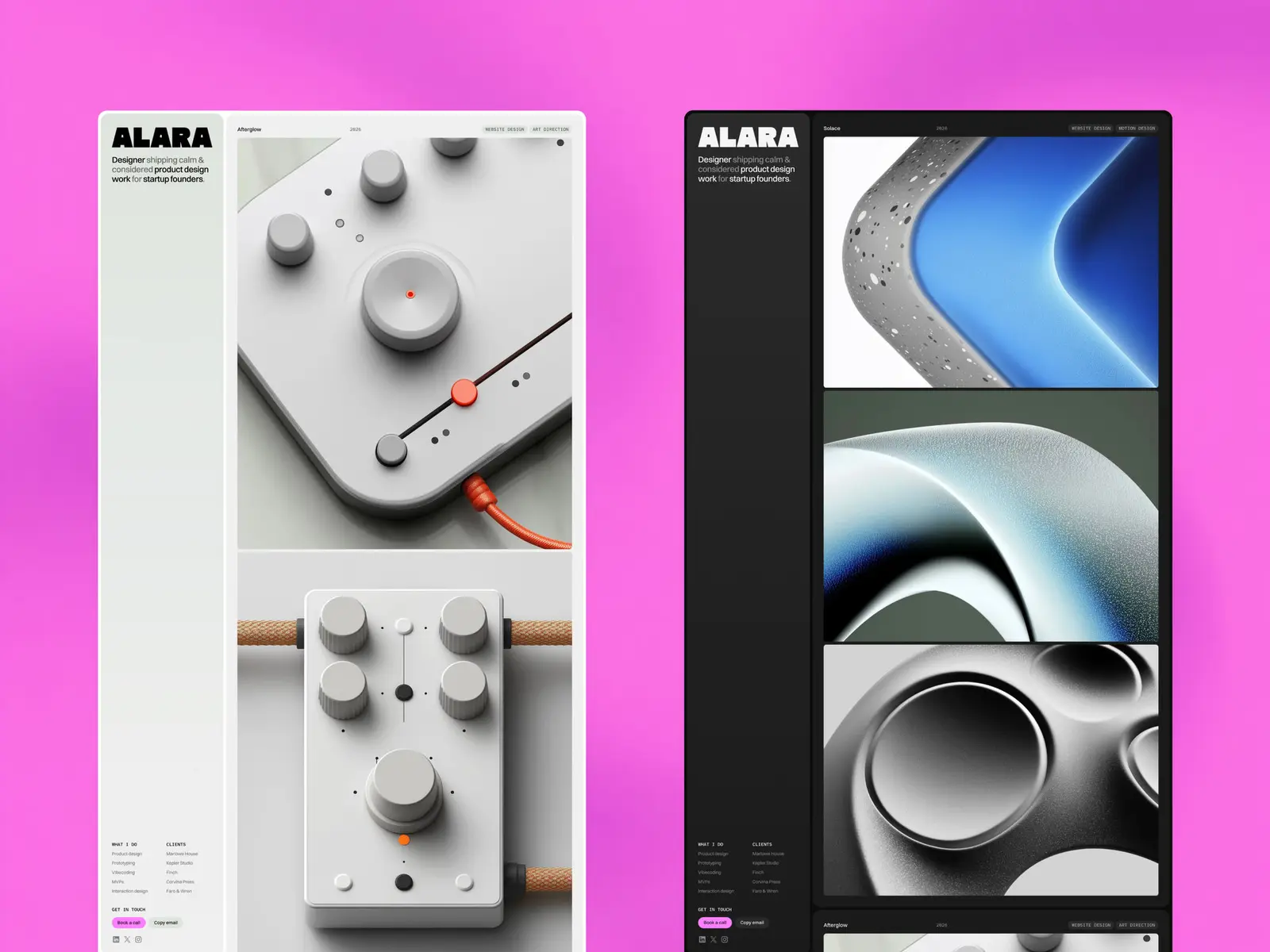
Alara pins your name, role and contact details to a fixed sidebar and lets the work scroll past on its own. Add a project — a title, a year, a couple of tags and the images — and the feed builds itself. There are no case-study pages, so skip this one if each project needs a long write-up.
Photographers, illustrators and designers whose work reads on sight and doesn’t need a written case study next to it.
$149 · Single site licence
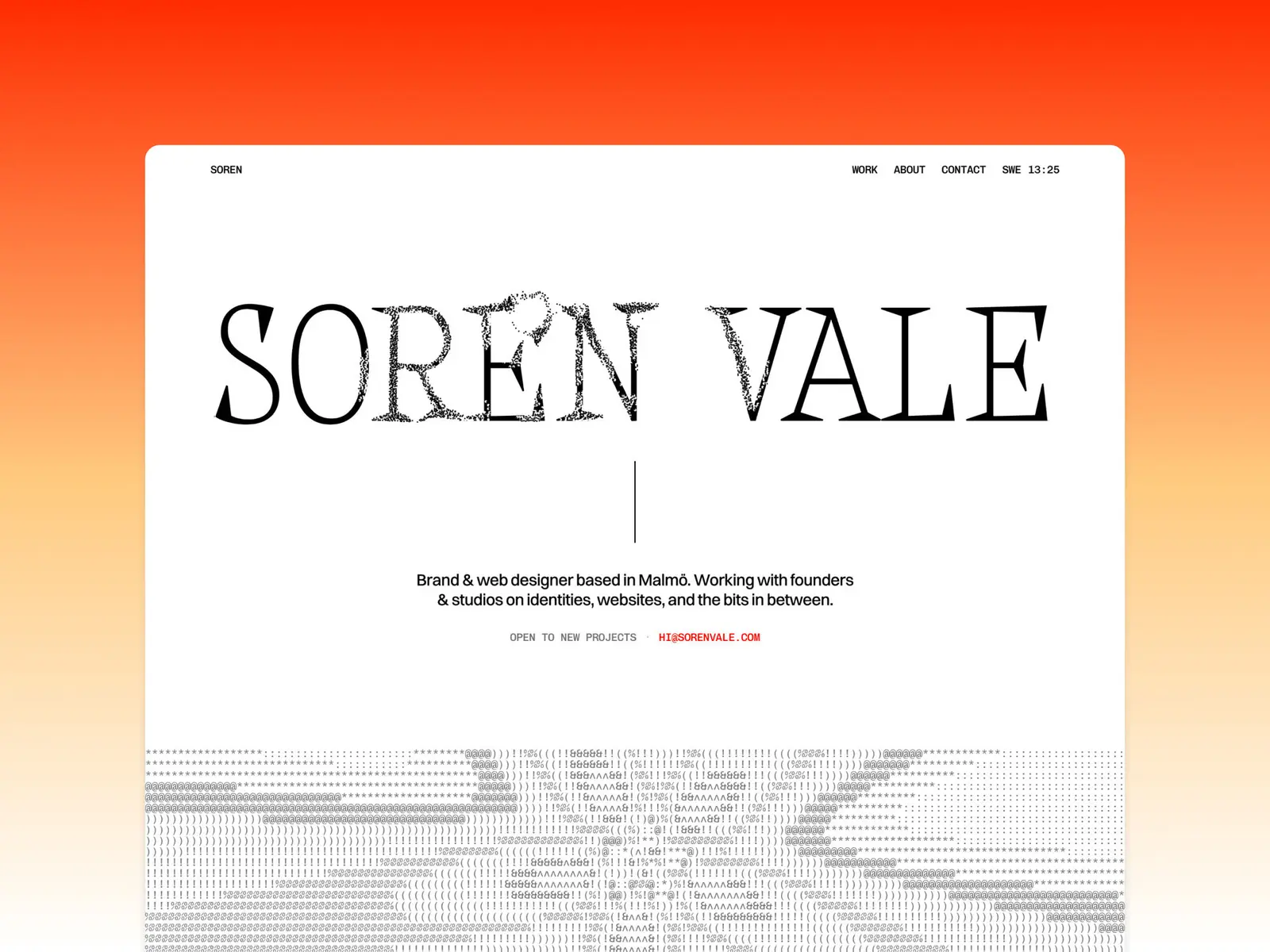
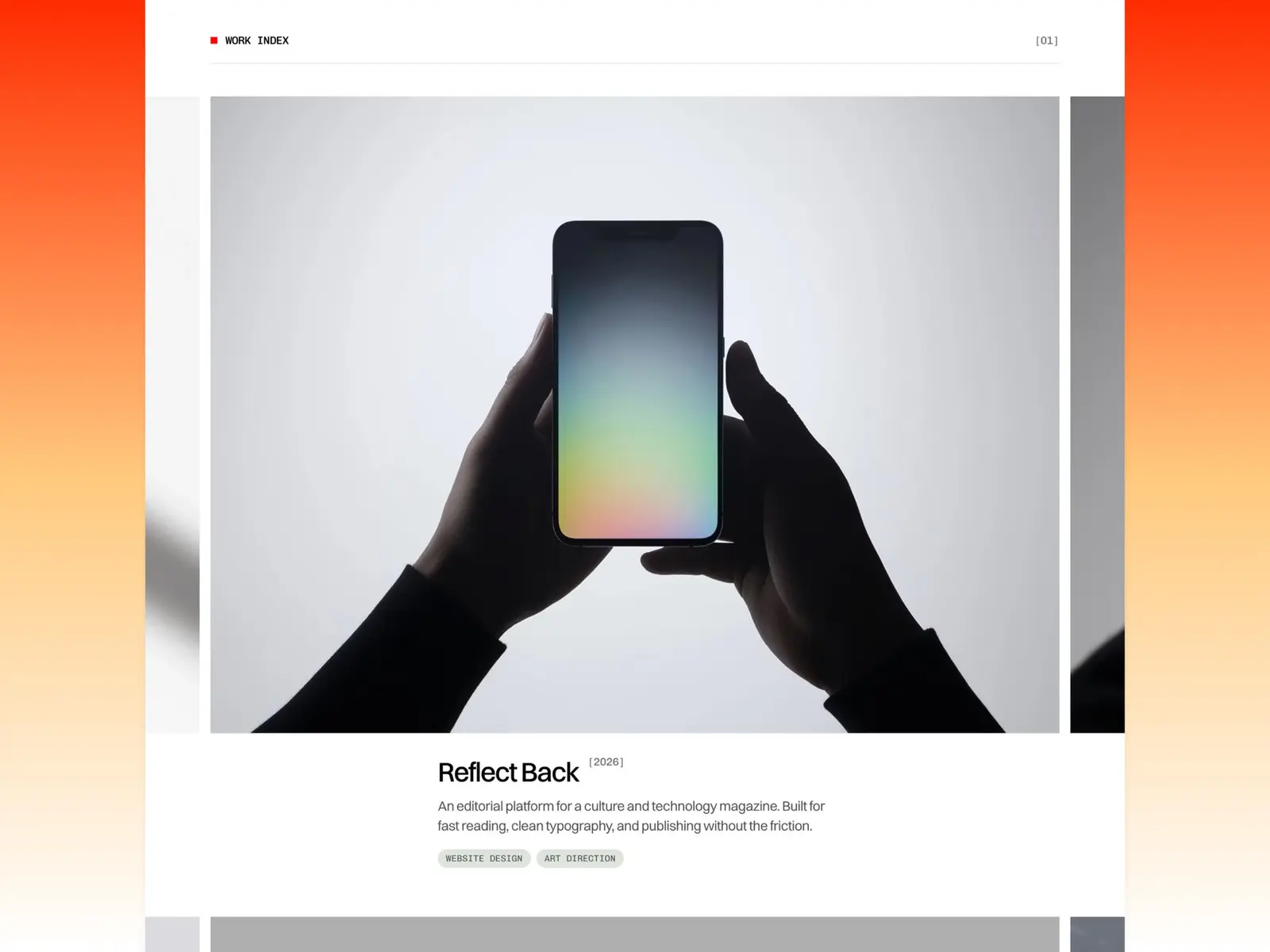
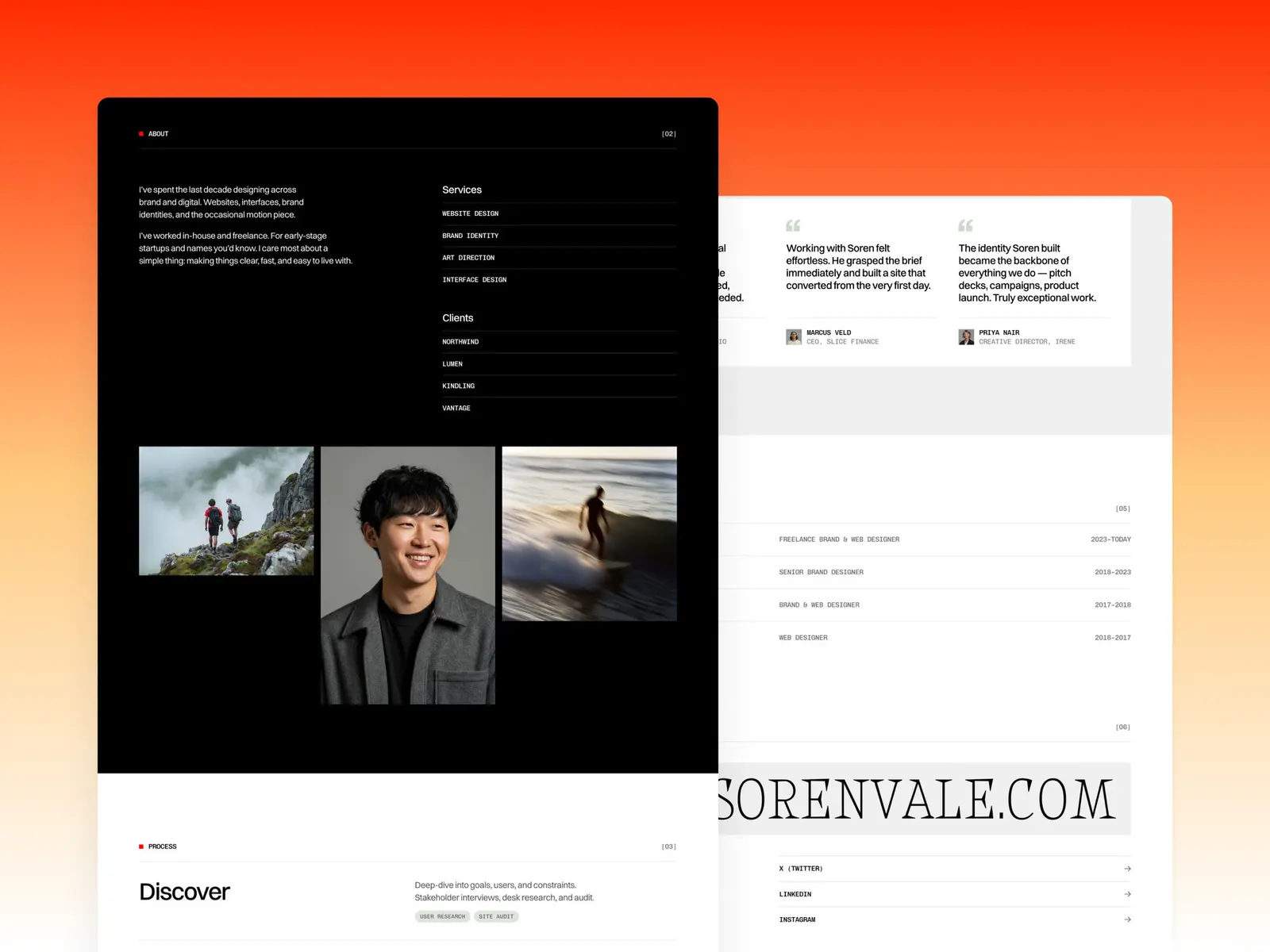
Soren leads with a giant serif nameplate and an ASCII hero that animates on load, set against a monospace UI layer. Three pages, and the work index runs entirely from the CMS. This is the most typographic option here — the layout carries the site, not the imagery.
Designers and small studios who want type to do the work — strong for people whose projects are hard to summarise in a thumbnail.
$149 · Single site licence
For a premium, comprehensive portfolio that can grow into an agency site, Method is the most complete option. For personality and a built-in blog, Sharp is the strongest pick. Jonas and Format are both excellent one-pagers — Jonas for the bento grid feel, Format for clean card-based simplicity. Wynn is the bold choice for designers who want a site that commands attention. Darkfolio is the pick if your work looks best on dark. Luna hits a strong balance of personality and polish at $49. David Clark is the most minimal option on the list — nothing gets between the visitor and the work. And Outlined is free, which makes it an obvious starting point for anyone who wants to test a portfolio before committing to a template.
See the full collection on the Framer portfolio templates page.
CMS support for case studies so you can update work without editing the layout. A clean visual hierarchy that puts project images and outcomes front and centre. Strong mobile performance — clients will check your portfolio on their phone. And a design with enough personality to be memorable without being distracting.
One-page templates (Jonas, Wynn, Format) are faster to set up and keep things focused — a visitor sees everything in a single scroll. Multi-page templates (Sharp, Method, Darkfolio, Luna, Outlined, David Clark) give more room for detailed case studies and writing. If you have 4–6 pieces of work and want to move fast, one-page is fine. If you have deep case studies to share, multi-page is worth the extra setup.
Sharp and Method both include a built-in blog CMS. For templates without one, you can add a blog using Framer’s CMS and a list layout — it’s a common addition with good tutorial support.
It depends on your audience. For product designers and developers, dark mode is expected and adds credibility. For brand and marketing designers, light mode often reads as more accessible and welcoming. Darkfolio, Jonas, and Method all support dark mode — the rest default to light.
With CMS content ready (project images, descriptions, bio), a one-page template can be live in a few hours. A multi-page template with detailed case studies typically takes a day or two. The biggest time cost is writing the case study copy, not the setup itself.
Want every Framer template in one purchase? Unlimited Access includes all current and future templates.
Join 2,900+ designers · Unsubscribe at any time